The Hard Way to Everest: The Trail Below Lukla
On rough mountain roads, a room above a stable, and four strangers who were gone by six.
The Road That Makes the Engine Audible
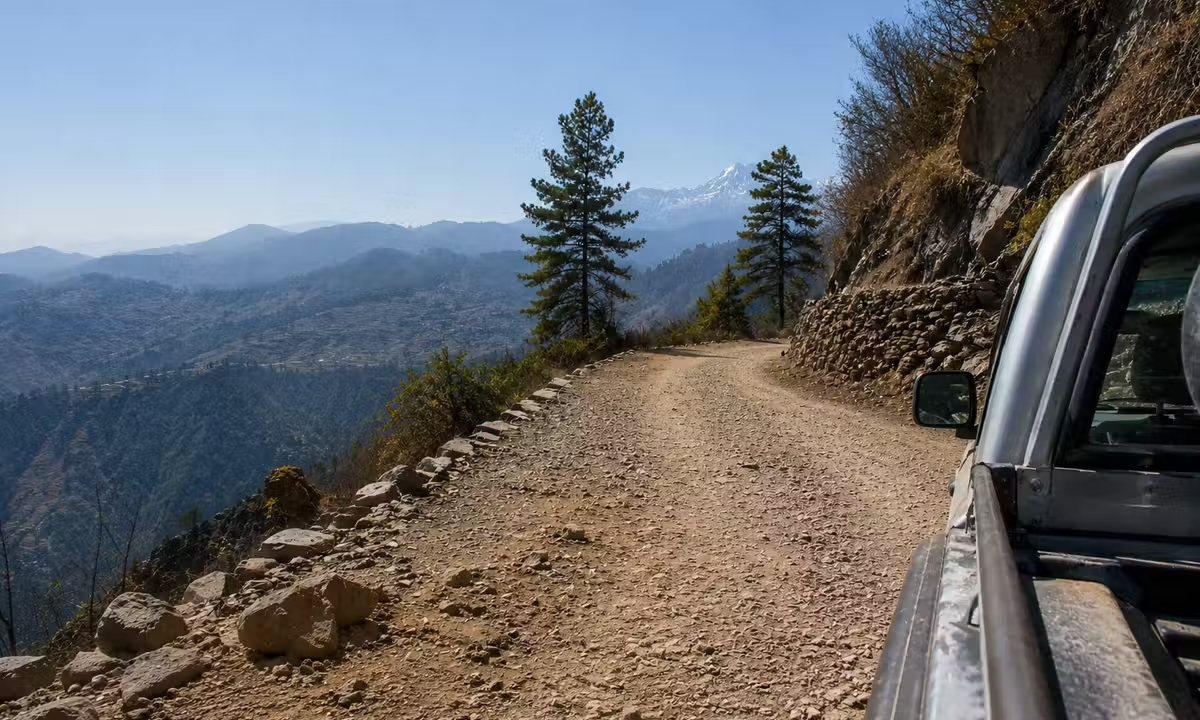
We set out from Salleri to Thamdanda on the back of a pick-up truck, and about half an hour later, I understood why a four-wheel drive was put forward as a requirement and not a suggestion. Anyone planning to do the Everest Base Camp trek overland should know that if the flight is scary, the road isn't there to calm your nerves either. Big rocks on either side, gradients steep enough to make the engine audible in a way that makes you think that even an inanimate object can get tired, and bends so tight that the vehicle could not complete them in a single movement. The driver would inch forward, reverse, adjust, and try again, with the patience of someone who had done this enough times to no longer find it remarkable. I had begun to think about the people who built these roads, about what it takes to look at a mountain and decide that a road will go through it regardless. These days it seems no mountain is left untouched. The roads keep edging closer, higher, and further in, and you cannot always tell if that is progress or something else.
The EBC Route Nobody Photographs
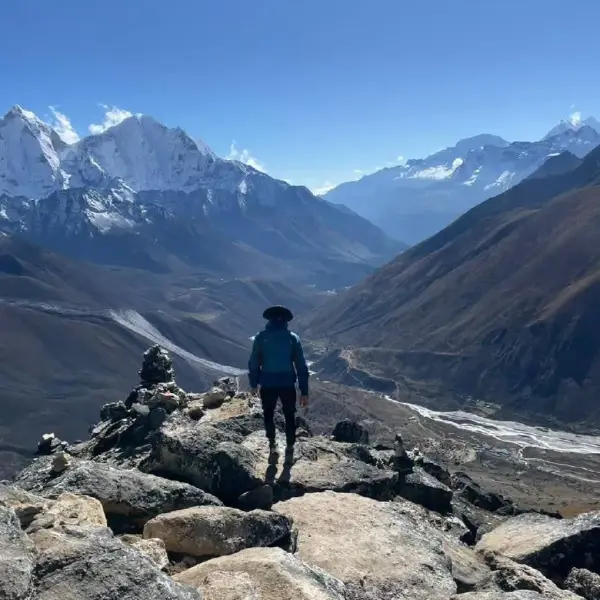
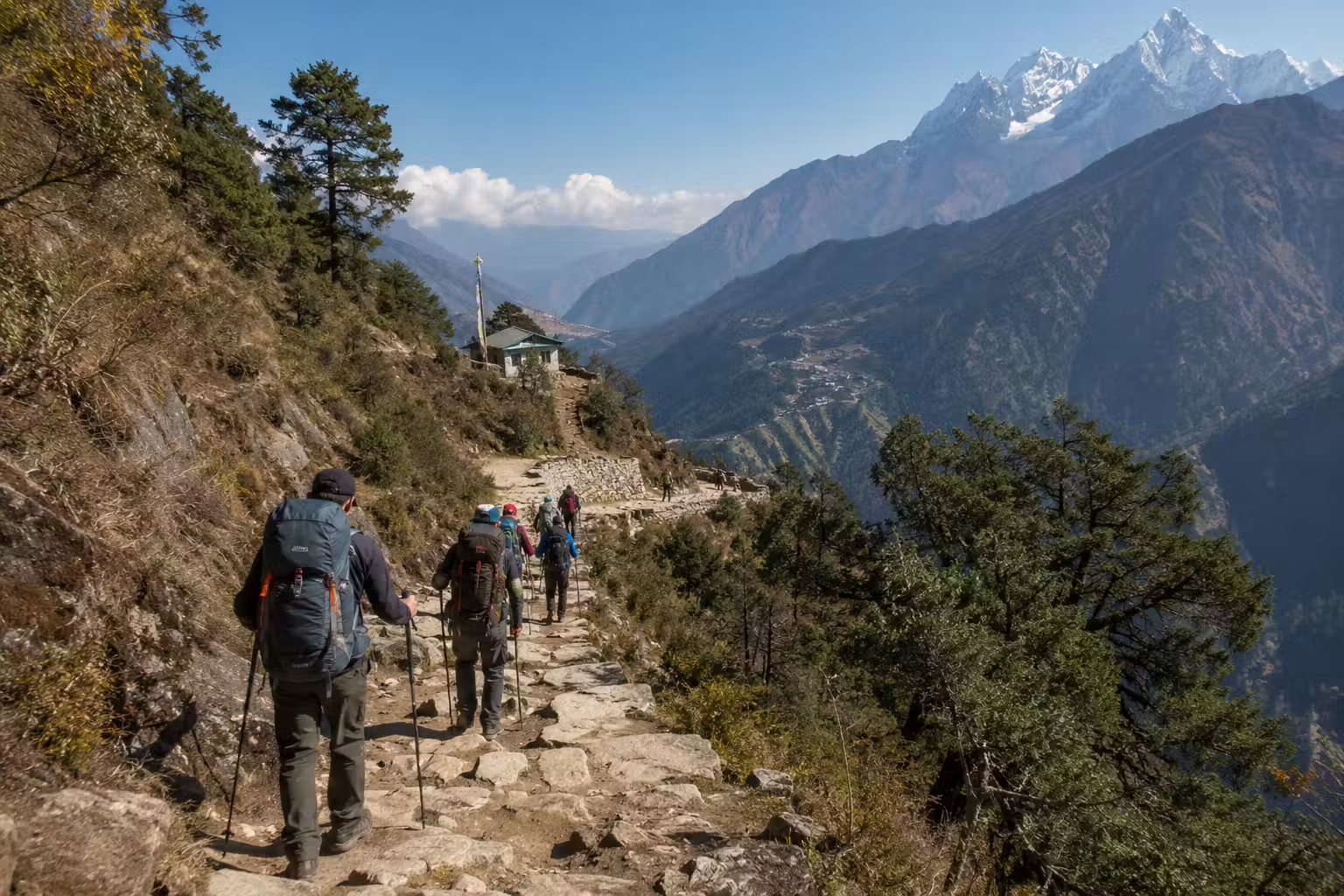
We got off a few minutes before Thamdanda, where the road had deteriorated enough to make continuing inadvisable, and began to walk. This is where the Everest Base Camp route begins for those arriving overland, though the trail looked nothing like the photographs that dominate travel blogs and agency brochures. Those images are usually taken somewhere above Lukla, where tourism infrastructure has had decades to settle into itself. Below Lukla, the trek felt rougher and more improvised. The EBC route carries a reputation for comfort by Nepali trekking standards, and above a certain altitude, that reputation is deserved. But down here the infrastructure was visibly straining under more visitors than it had been built for, many of whom, I suspected, would not have been walking at all had the skies over Ramechhap been clear.
Lunch by the Kharikhola
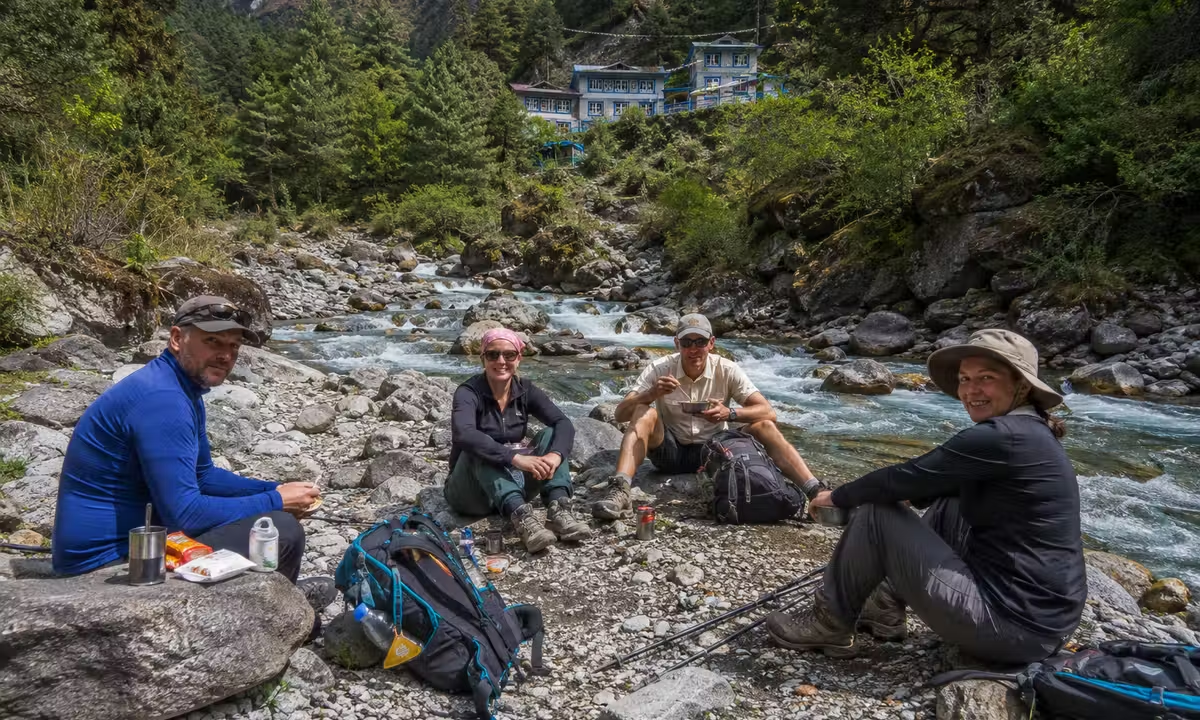
We stopped for tea and lunch somewhere along the Kharikhola River, which had the quality of the kind of spot that makes you glad you stopped. There is a familiarity to trekking in Nepal that I have noticed across regions, a similarity in the way travellers are greeted, in the rhythm of a lunch by a river at the foot of a hill, and in the dal bhat that arrives without much ceremony and is better for it. I used to think this sameness was something to be lamented, evidence that one trail was interchangeable with another. I no longer think that. There is comfort in the familiarity, and the differences, when they come, arrive gradually and on their own terms, which is the only way differences worth noticing ever do.
Paiya at Dusk, and No Rooms Left
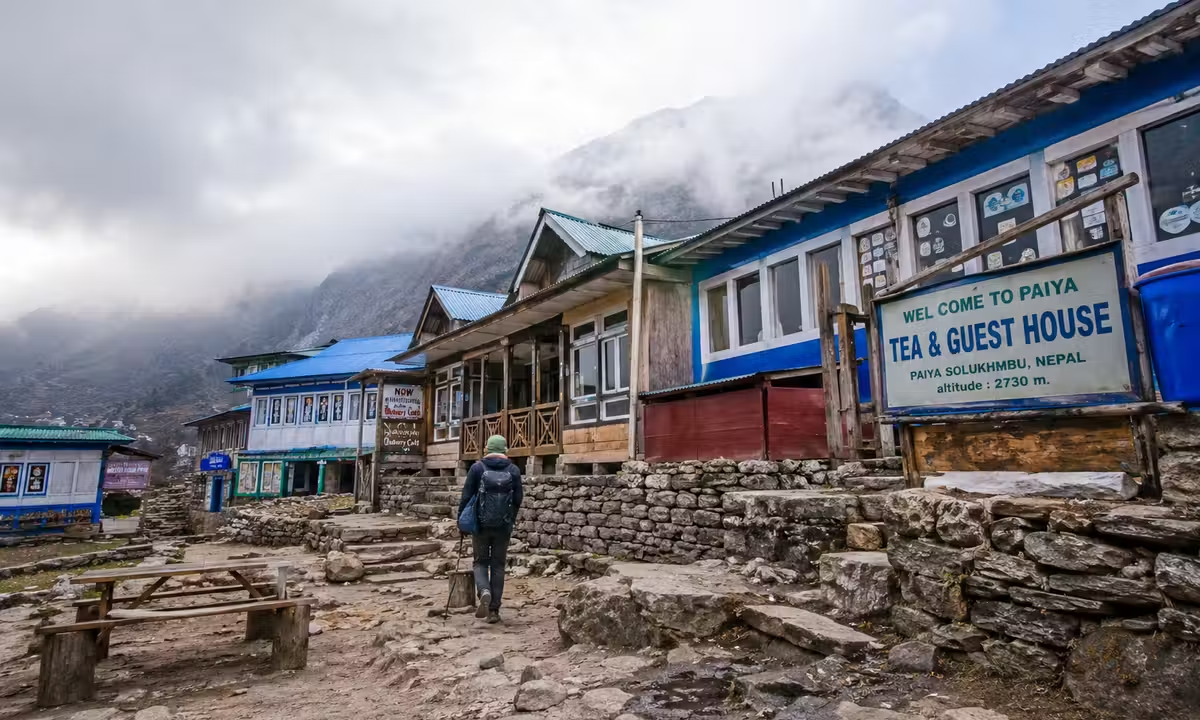
By the time we reached Paiya, the sun had gone. Trekkers doing the EBC route below Lukla should try not to arrive this late, particularly during peak season. Accommodation at smaller stops fills quickly, and booking ahead is not always possible.
We asked at the first teahouse and were told they were full. We asked at the next and were told the same thing. I asked one of them whether we could sleep in the dining room and was told, with some finality, that even the dining room was full. The nearest alternative was further up the trail, and no one could say with confidence that there would be space there either. We were tired in the particular way that arrives at the end of a long day that began in the back of a pickup truck and did not relent. So we kept asking.
What the Lower Trail Reveals When the Flights Stop
What became clear over those two days is that the lower section of the Everest Base Camp route operates differently from the better-known trail above Lukla. Much of the infrastructure below Lukla still serves local movement first and tourism second. During normal conditions, this is not especially noticeable. But when flights into Lukla are cancelled for several consecutive days, hundreds of trekkers begin arriving overland through Salleri, and the pressure shows quickly. Rooms fill early, dining halls become sleeping spaces, and places that are manageable during ordinary weeks begin operating beyond what they were designed for. Anyone planning the overland EBC route during peak season should build in extra time, start walking early, and avoid assuming that accommodation will always be available at the next stop. The mountain weather above Lukla has a way of reshaping life far below it.
The Room Above the Stable
Eventually, someone pointed us toward a room that was kind of sort of over a stable or something. It was not listed anywhere, did not have a signboard, and would not appear in any travel forum recommending places to stay on the EBC trail below Lukla. Six of us slept there that night, my cousin and I alongside four locals, in a room with ventilation generous enough to make the distinction between inside and outside largely academic. We didn't have to get a menu because there was none. Just simple dal bhat, and that was enough. We ate and slept.
Six O'Clock, and the Mountains Were Waiting
What I have not forgotten is the morning after. At six, or close enough to six that it made no difference, the four men sleeping at the far end of the room rose in what felt like a single movement. No conversation, no delay. They pulled on their shoes, gathered their sickles and dokos, and stepped out into whatever the day had decided to be. My cousin and I lay there for a moment watching the door close behind them. Then we got up as well. There were mountains ahead, and no good reason to keep them waiting.
"There were mountains ahead and no good reason to keep them waiting. "
Planning the Everest Base Camp trek?
Compare verified agencies, itineraries, and packages — whether you are flying into Lukla or going the hard way overland.
Frequently Asked Questions
What is the EBC trail like below Lukla?
Below Lukla, the Everest Base Camp trail is rougher and less developed than the well-known upper section. Infrastructure here primarily serves local movement, with teahouses and guesthouses that are smaller and less predictable than those above Lukla. The scenery is genuine and the trail quieter during normal seasons, but it lacks the reliable teahouse network that most EBC guides describe.
How crowded does the trail below Lukla get when flights are cancelled?
When flights into Lukla are cancelled for consecutive days — which happens regularly in spring and autumn — hundreds of trekkers reroute overland through Salleri. The lower trail absorbs all of them simultaneously. Rooms fill within hours, dining halls become sleeping spaces, and accommodation at small stops like Paiya can run out entirely by late afternoon. If you are taking the overland route during peak season, start walking early each day.
Can you book accommodation in advance on the EBC trail below Lukla?
In most cases, no. The smaller teahouses and guesthouses below Lukla do not have online booking systems. Securing a room is done in person on arrival. During normal trekking conditions this is manageable, but during high demand periods — especially when Lukla flights are disrupted — availability is unpredictable. Arriving at your planned stop before 3 PM significantly improves your chances of finding a room.
Where is Paiya and what is it like as an overnight stop?
Paiya is a small stop on the EBC trail below Lukla in the Solukhumbu district of Nepal. It sits between Thamdanda and Bupsa and is a natural overnight point for trekkers who begin walking from Thamdanda. During normal seasons, it is quiet and manageable. During peak season with high trekker volume, it fills quickly. Facilities are basic — expect simple teahouses, dal bhat, and limited amenities.
How long does the walk from Thamdanda to Paiya take?
The walk from Thamdanda to Paiya takes approximately 5 to 7 hours depending on pace and conditions. The trail involves a mix of ascent and descent through forests and river valleys, including the Kharikhola area. Starting early from Thamdanda ensures you arrive at Paiya with enough daylight to secure accommodation.
Sarans Pandey
www.facebook.com/saranspandey89Travel enthusiast and Travel writer
Comments
Join the conversation and share your thoughts.
Loading comments…