The Bus Goes to Ulleri Now
On skipping Lukla, climbing infamous steps, and returning to a place I've never stopped missing


The Elsewhere You're Looking For Isn't Here
I was not entirely sure where or how far I would go, but I knew I would pass through Ghorepani. I have been there four or five times already, and yet I never seem to tire of it. I especially appreciate returning in different seasons, because each time nature reveals itself anew, with a different temperament, a different voice, different colours, and different sounds. I am not entirely sure just going up to Ghorepani qualifies as a trek, but then I have no idea what does. To me, some treks are just walks in a different terrain. If I did a similar journey in the plains, it would be called walking, but once I do it traversing hills, why does it have to all of a sudden morph into an activity? This is one of those random, pointless questions I find difficult to reconcile. Anyways, there is something about Ghorepani that keeps pulling me back, something I have not fully been able to articulate, which is perhaps the reason I keep returning.
Poon Hill, Once, and Never Again
Mind you, although I have been there several times, I have only ever been to Poon Hill once, and I have no intention of going up again. I remember my first and only time quite vividly. Winter was on its way out, but it had not yet loosened its grip. We had climbed up before dawn, joining a quiet line of people, each carrying a small torchlight that flickered in the dark. We stood there waiting, the cold settling into our hands and faces. Then, slowly, the sunrays pierced through the darkness and bathed the mountain tops in gold. "The Best View Point in the World," a signpost had declared somewhere along the way, and I remember thinking, damn right it is. Perhaps it is fear that prevents me from returning, alongside the usual lethargy. A fear that if I go back and climb up once more, I might find the world's best viewpoint looking ordinary. So I would rather leave the memory untouched, preserved exactly as it was, still holding its quiet spell over me.
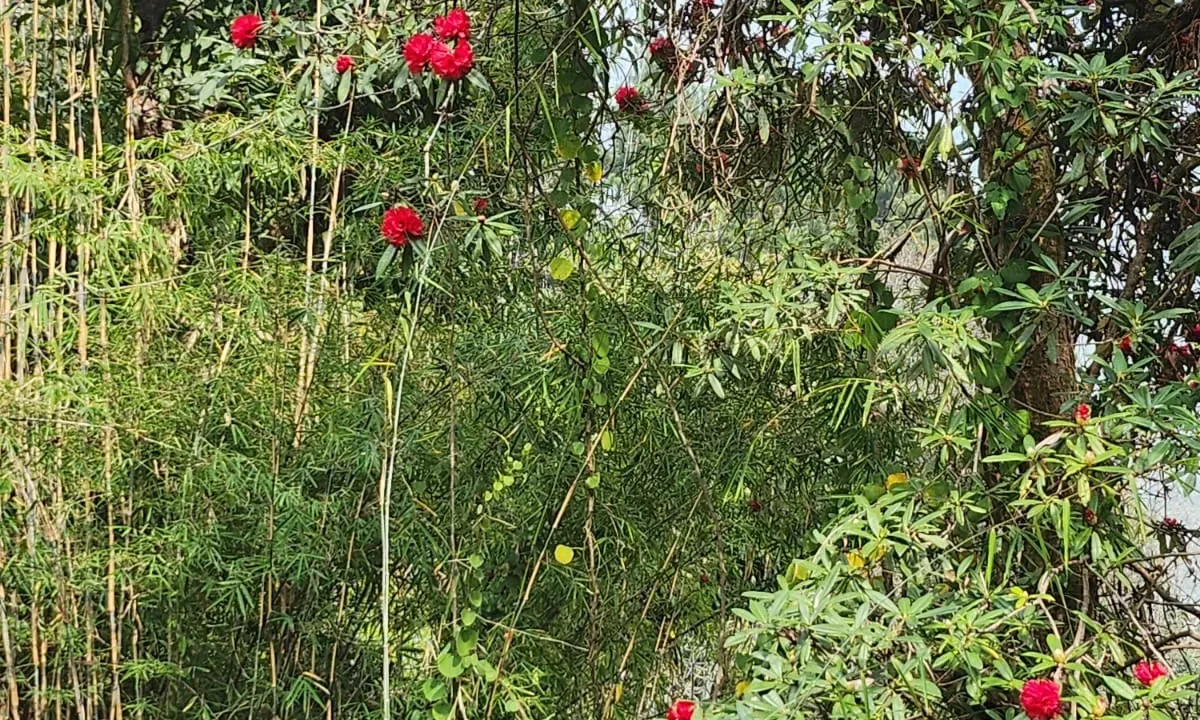
The Bus Now Goes All the Way to Ulleri
In the end, I decided I would head to Ghorepani directly instead of making it an addition to another trail. I left my accommodation in the morning and walked thirty minutes to the Baglung bus stop, looking for the bus to Tikhedhunga, which I knew from memory existed. What I did not know, however, was that the bus now went all the way up to Ulleri. When the conductor casually floated this information to me, I stood there for a moment reconsidering my starting point. I had never seen much utility in starting from Nayapul, given that the stretch up to Hile is essentially walking on the side of a dusty road that one has to share with buses and jeeps. On the other hand, if I were to skip Hile and take a bus straight to Ulleri, I would miss the infamous steps, that brutal incline I have always thought of as a kind of ritual, the price one pays to witness what the mountains eventually reveal.
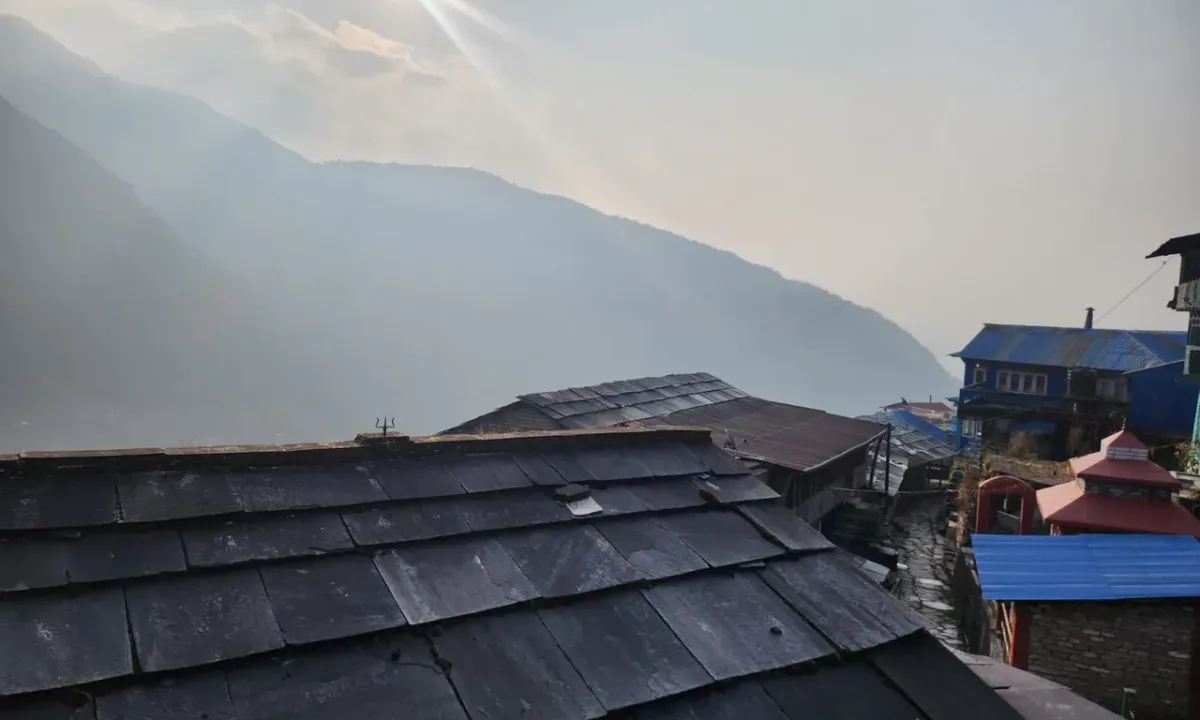
People You Meet on a Bus to Nowhere Specific
The bus was due to leave in twenty minutes, and in the meantime, I got talking to a Chinese traveller who wanted some reassurance about where we were headed. I told her I had studied in China, which made her briefly enthusiastic, until she discovered I spoke very little of the language, and that enthusiasm disappeared almost immediately. Not long before we set off, a group of four young Nepalis boarded. Two girls and two boys. The conductor directed them to their seats on one side of the aisle,, but one of the girls was adamant she had booked a single row, citing the numbers 5, 6, 7 and 8 written above. What she had not registered was that each column had those same numbers, so one couldn't distinguish between the two, a fact which her friend pointed out after a moment. She still seemed certain that the people sitting in what she considered her seats should have to get up and leave. No particular malice in it, just the confidence of someone born in the age of modernity. I thought about it for a while. If everyone plays strictly by the rules, the informal generosity that holds a lot of things together here quietly disappears.
The Conductor and the Chinese Girl
After about forty-five minutes, the conductor began collecting fares. But when it came to the Chinese girl, he took a thousand-rupee note from her and wandered off with it. She said it once, quietly, so quietly that the conductor missed it. Then she spoke again, in a voice I would not have expected from someone of her size, firm and unflinching, reaching the entire length of the bus: "Sir, please give me my change." Firm and yet polite. He seemed startled, but he obliged, as he should have without her having to say it. I was glad she said it, because not everyone would, and for some, speaking up is simply too daunting. They remain silent instead, carrying it inward, fuming quietly with anger, guilt, and the lingering regret of what they might have done differently. Foreigners often praise Nepali people for being among the nicest, but at times it is disheartening to witness a degree of deceit that some seem to justify because those being deceived come from wealthier countries and can therefore afford it.
""I was glad she said it, because not everyone would. For some, speaking up is simply too daunting. They remain silent instead, carrying it inward.""
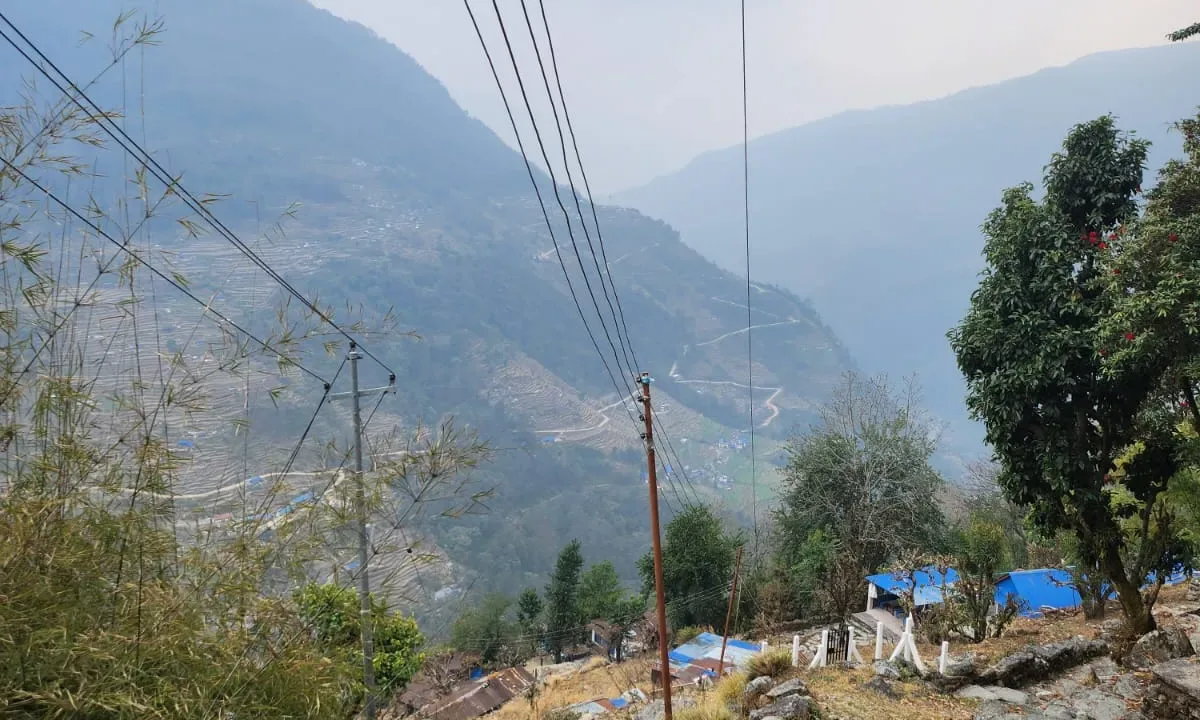
The Infamous Steps, and the Porter Who Couldn't Vote
I got off at Hile as planned. Hile is a pleasant place, cupped between hills with what I assume are rice fields and a river nearby. The houses and restaurants there have the quality of places where people actually live, rather than spaces arranged for those merely passing through. After you cross the suspension bridge at the very end of the village, the only direction available to you is up. The start of the infamous Ulleri steps, which are as much of a challenge going up as coming down. On the ascent, it is the fatigue that accumulates; on the descent, it is your knees quietly pleading for caution. I was stopping every few hundred steps at the rest platforms. At one of these stops, I got into conversation with a guy working as a porter heading toward base camp. I asked if he was going to vote in the upcoming elections. He said he would have liked to, but the work was seasonal, and he had to take whatever came his way. Losing income just to cast a ballot for people who would probably not change much did not seem worth it, he said, since he would still be carrying the load the next day regardless of who won.
Arriving Tired and Content in Equal Measure
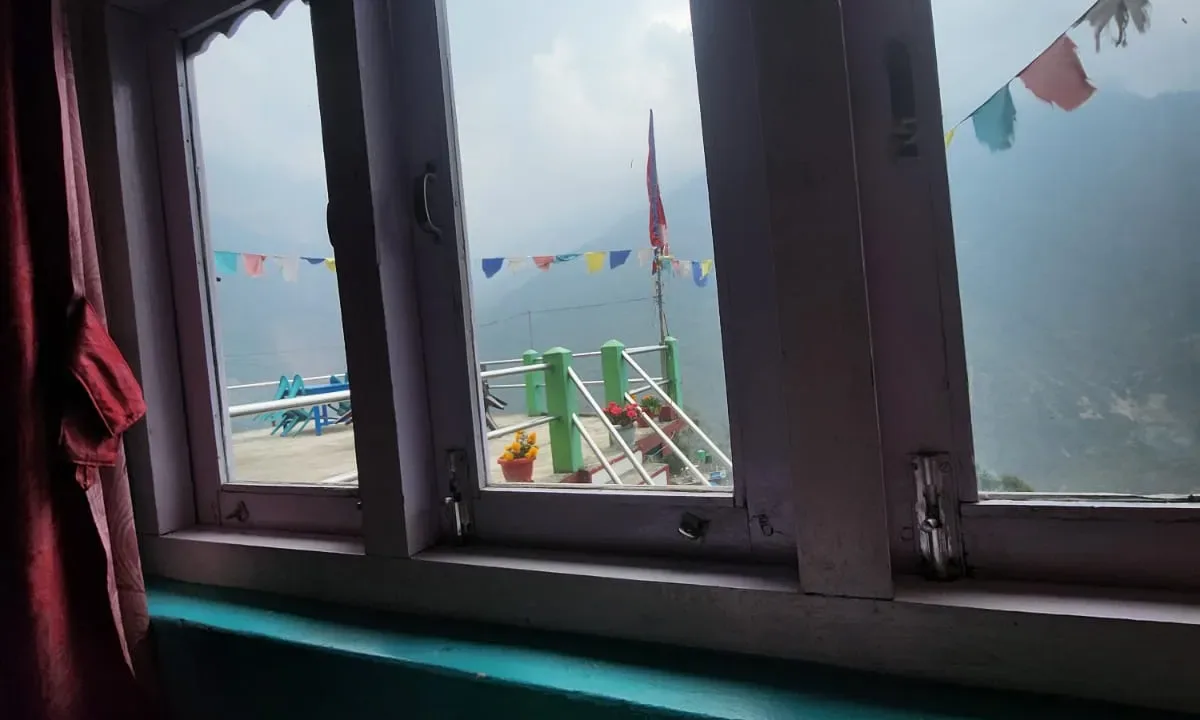
Halfway through, I was huffing and puffing, my back drenched in sweat, quietly praying for the same clouds I had initially wanted to disappear so I could see the view to return and cover the scorching sun. Getting to Ulleri is hard. And it is always on the first day, which I think is philosophically poetic. I arrived there tired and content in roughly equal measure, which is about the best one can hope for. The clouds had by then blanketed everything, and there was little left to see. Still, the absence of sight does not take away from the satisfaction of having arrived. The effort itself is as much part of the journey as what the mountains eventually reveal. I thought about going to a place I had stayed before, but after five minutes in the lobby with no sign of anyone, I moved higher and found a guest house with a terrace, run by two women, one of whom I assumed was Kalpana based on the name of the place. They were watching TikTok when I arrived. I took a room, had a shower, and went to the common area to read. Such is the trekking life, however, that two hours later I had not read a single page, having spent the time talking to a British couple instead. The husband had done Kanchenjunga when he was in the British Army, and the evening went from there.
Ready to plan your own Annapurna trek?
Compare verified trekking itineraries, agencies, and packages — all in one place.
Frequently Asked Questions
Where does this trek start and how do you get there?
Most people start from Nayapul, reachable by bus from Pokhara's Baglung bus stand. However, buses now run directly up to Ulleri itself, letting you skip the road-walk section. If you want the full ritual — including the infamous stone steps from Hile — get off at Hile and walk from there
How hard are the Ulleri steps?
Genuinely hard, especially on day one when your legs are fresh but your lungs aren't adjusted. It's a long, steep stone staircase that climbs relentlessly from Hile to Ulleri. The ascent is tiring; the descent is rough on the knees. Rest platforms (saman bisaune thau) appear every few hundred steps. Use them.
Is Ghorepani worth visiting without going up to Poon Hill?
Yes, absolutely. Ghorepani itself — the village, the trails around it, the changing light on the ridgeline, the rhododendrons — is worth the walk up on its own. Poon Hill is spectacular, but the fear of revisiting something perfect and finding it ordinary is real. The village holds plenty.
Where should you stay in Ulleri?
Several guesthouses are spread across the village at different elevations. Look for one with a terrace — the views, even on overcast days, make the climb feel like it was worth every step. Kalpana Guesthouse, mentioned in this piece, is run by two women and sits higher up in the village
How long does it take to walk from Hile to Ulleri?
Roughly 2 to 3 hours, depending on your pace and how often you stop. Stopping often is recommended—both for the rest platforms and for the view of how far you've climbed.
What's the best season for Ghorepani?
Each season reveals something different. Spring (March–April) brings rhododendrons in full bloom, especially on the stretch toward Tadapani — some of the most beautiful forest walking in Nepal. Autumn offers clearer skies and sharper mountain views. Winter is quiet and cold. There is no bad season, only different ones.
Sarans Pandey
www.facebook.com/saranspandey89Travel enthusiast and Travel writer
Comments
Join the conversation and share your thoughts.
Loading comments…


