Mardi Himal - Ghorepani Trail in July: Monsoon Trekking
Kande → Australian Base Camp → Forest Camp → High Camp → Mardi Base Camp → Dobato → Deurali → Ghorepani
Why Trekking in Monsoon Is Still Worth It
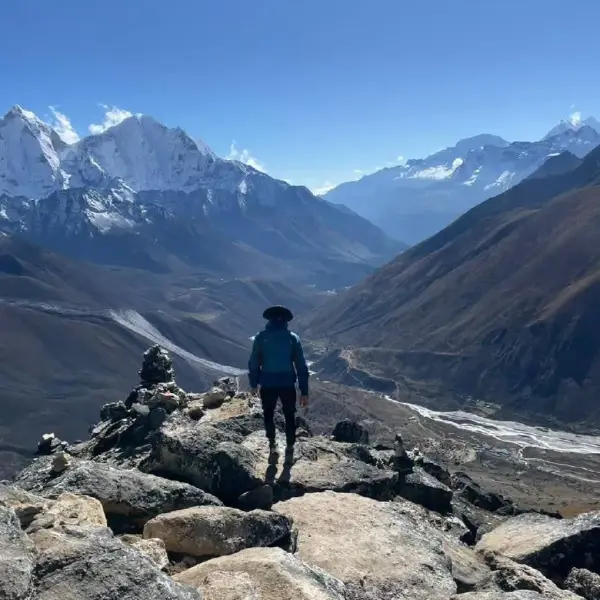
Trekking in the monsoon is highly unrecommended, but it is also rewarding. Chances are you won't see any mountains, which might prompt you to question the entire point of the trek, but what you will see, and that too quite clearly, is a different face of nature, one that goes beyond the physical. And perhaps that is the allure of off-season trekking, that despite the possibility of your journey being without a visual highlight, you decide to march on, knowing that the visual isn't more important than the experiences you accumulate. You see, both literally and metaphorically, that life isn't always sunshine.
Getting to Kande: A Clear View Before the Clouds Arrived
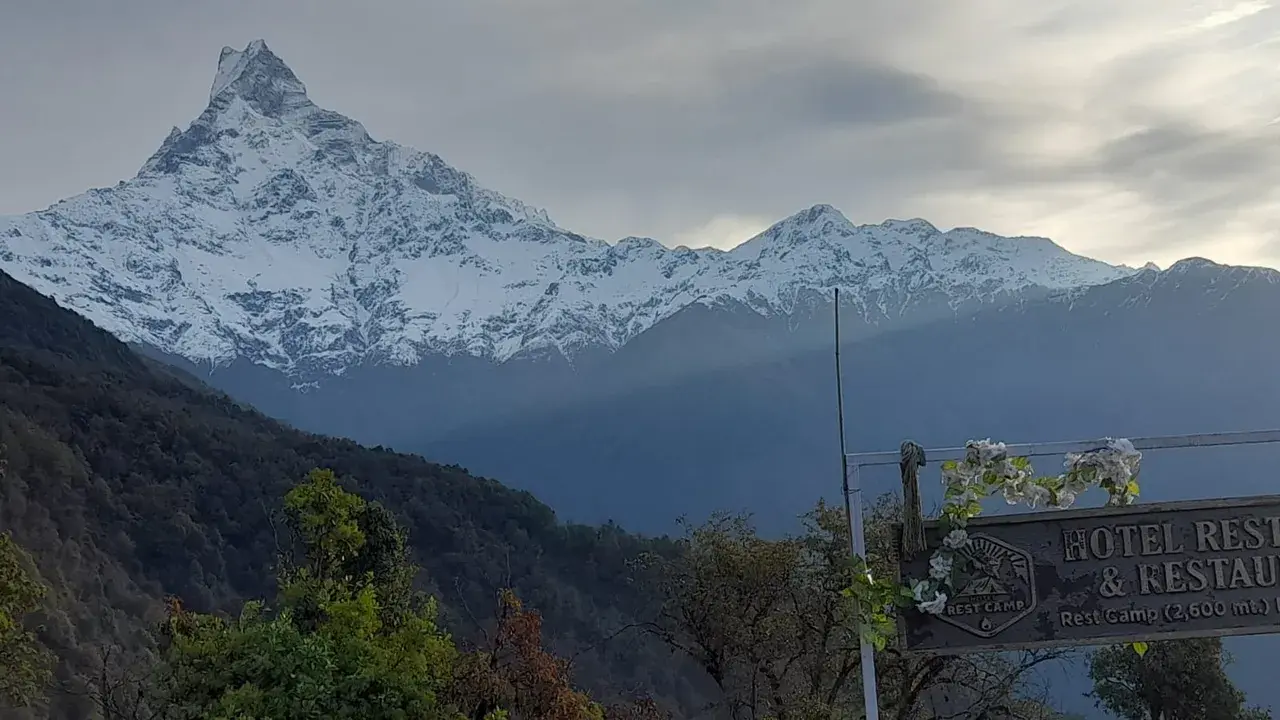
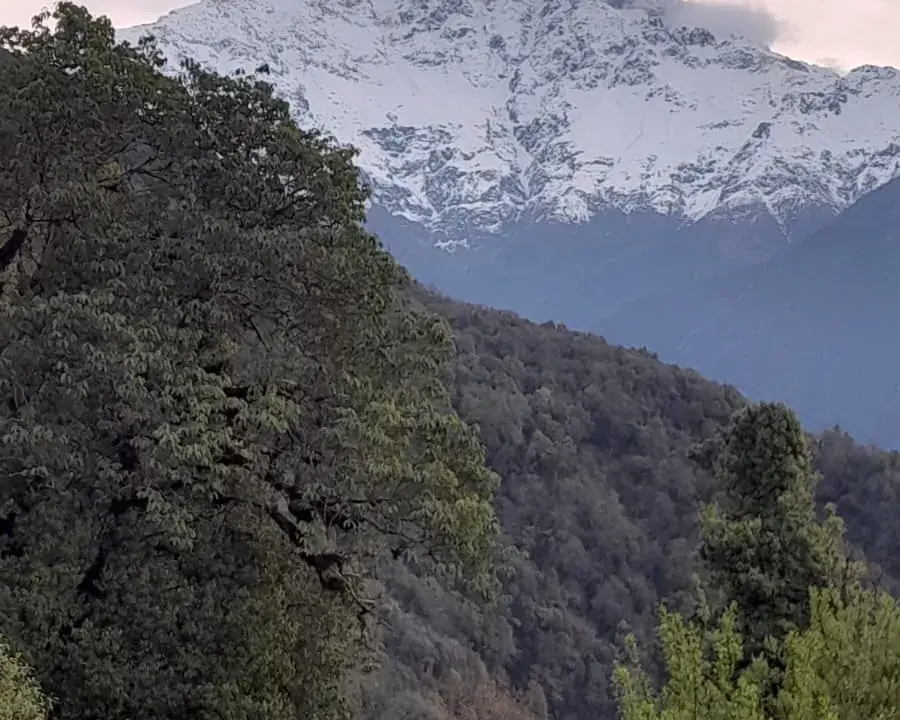
When I set out to do the Mardi Khopra trek in July, I knew that it was going to be different from all of my previous treks. It was a pleasant Saturday morning when I took a bus from Sorakhutte to Pokhara. Before hopping on, I bought two Nepali newspapers to keep me company as I had some time to kill before the bus took off. Somewhere along the middle pages, I read that only 55% of the plantation had been completed because of a lack of rain. I took a mental note of it, but the realisation only struck when I headed to Kande the next day with a clear view of Machapuchhre. Perhaps even the weather was resorting to the infamous Nepali time.
The Climb to Australian Base Camp: Sun, Heat, and Saune Jhari That Never Came
As I trudged up the path towards the Australian base camp, I could feel the scorching heat of the sun bearing down on me. After every few steps, I would stop to take a breather, turn around and look at the sky, which remained blue and unperturbed by monsoon clouds. I stopped for a light meal at Pitam Deurali, where the guy from the tea shop himself seemed baffled by the weather. In Shrawan, it is supposed to rain. There's supposed to be Saune Jhari. But look around. I guess you are lucky."
Forest Camp to High Camp: When the Clouds Finally Caught Up
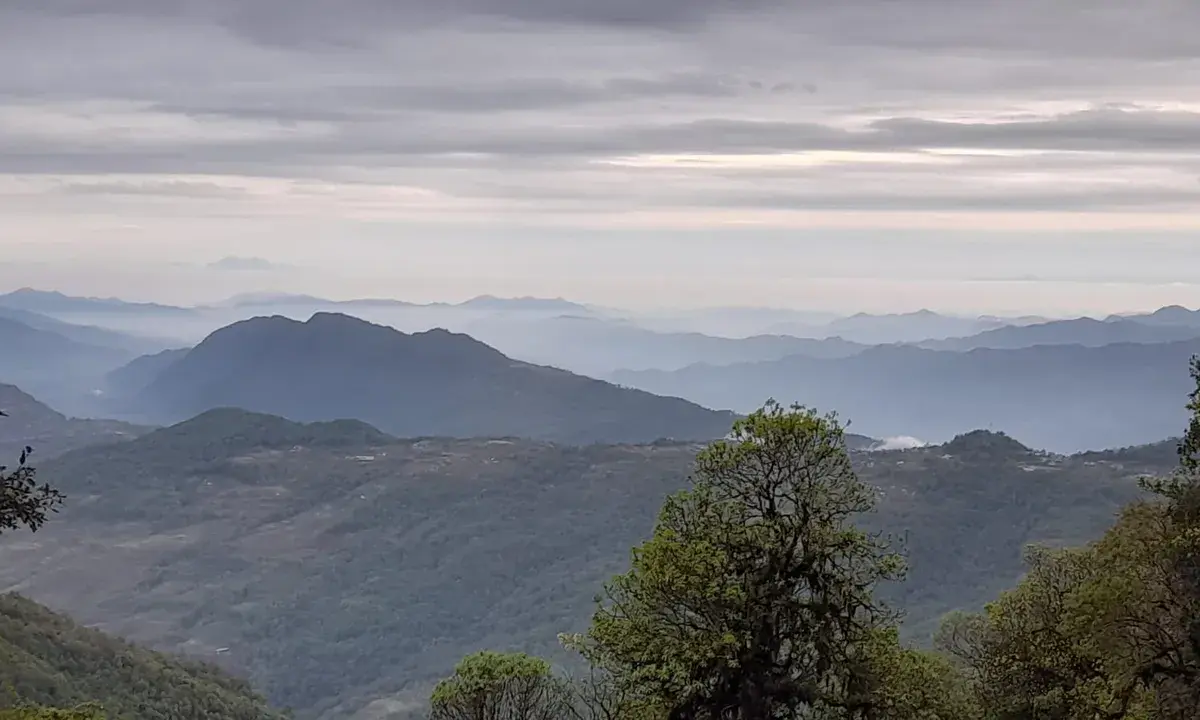
After spending a night at Forest Camp, I set out for High Camp early in the morning without having any breakfast. It wasn't raining, but clouds were accumulating in the sky. When I reached Badal Danda, I could partially see one of the mountain peaks, although, quite tragically, I didn't stop to ask around which one it was. I arrived at high camp at around eleven, and because I had nothing else to do, I decided to head for Mardi Base Camp.
Alone in the Rain: The Walk to Mardi Base Camp
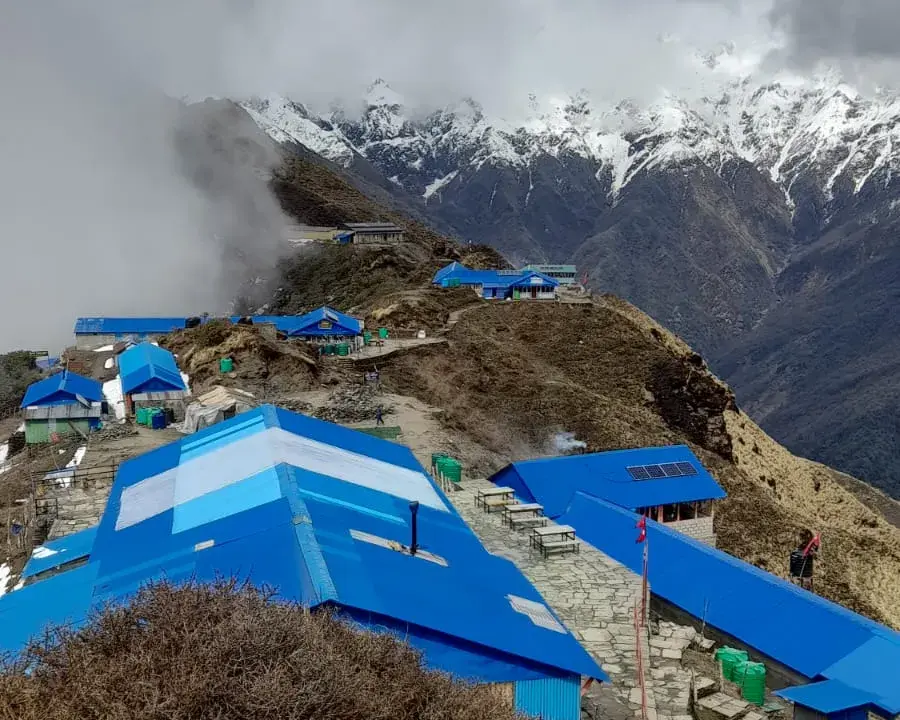
On my way up, I was initially accompanied by a dog who left me halfway after which it was just me and the rain. It felt as if the higher I went, the heavier the downpour. I saw maybe three or four locals who were on their way down, but that was it. I was alone, but I didn't feel stranded. Instead, I felt grateful towards the strangers whose footprints I could follow in the form of a trail without getting lost.
The two memorials along the way made me contemplate the fleeting nature of my existence and how insignificantly small I felt walking up. Everything was blanketed by clouds, and I couldn't even properly see anything beyond maybe fifty meters in each direction. Nature, which so far had only been synonymous to beauty, looked daunting. A sort of fear and insecurity crept into me, but it was followed by an appreciation of life and the cycles that filled it with different colours, of which gray also happened to be one.
"A sort of fear and insecurity crept into me, but it was followed by an appreciation of life and the cycles that filled it with different colours, of which gray also happened to be one."
Dobato to Ghorepani: Cutting the Trek Short, Leeches, and Bears
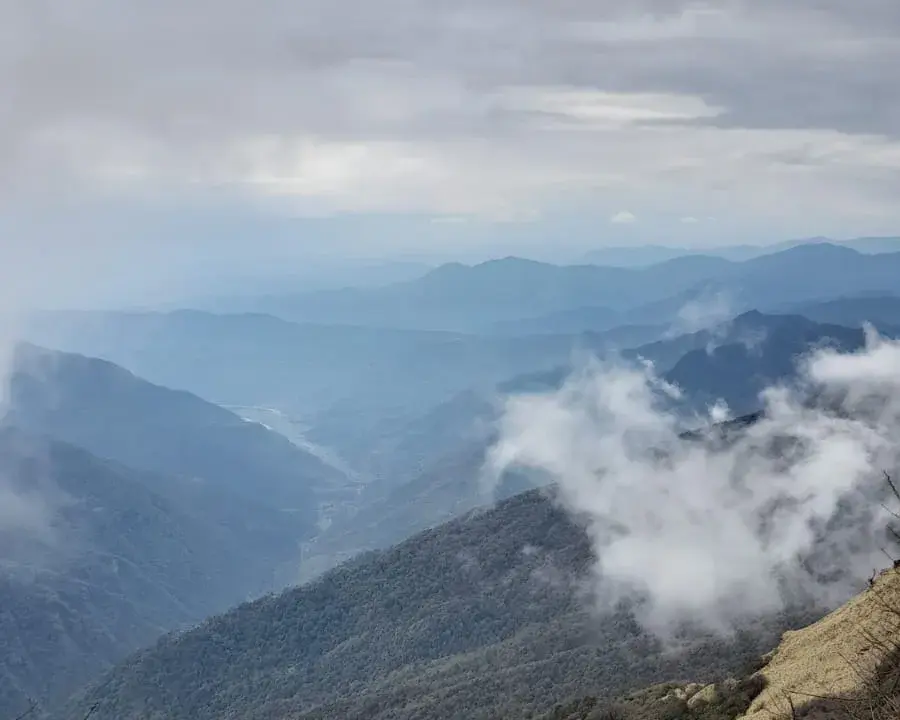
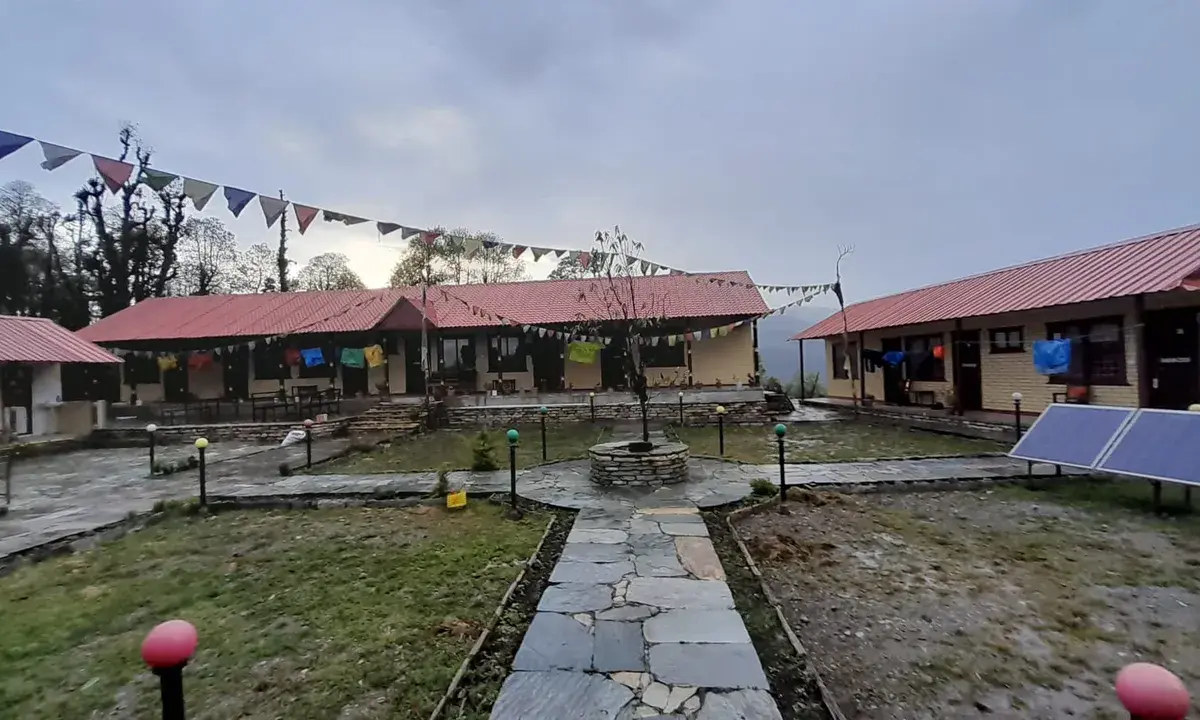
The dark clouds refused to blow over the next day or the day after that, at which point I was at Dobato. On the morning I was supposed to set out for Khopra Danda, I decided I would cut the trek short and head to Ghorepani instead. The downpour didn't stop as I walked the muddy and bushy path to Deurali, where I stopped for tea. I had leeches all over my shoes, but ever since the locals in Isharu had warned me about bears, they had become unimportant. The atmosphere in Ghorepani was gloomy. In the eyes of the locals, I went from being lucky to unlucky. I stared at the clouds and wondered how the farmers were feeling.
Thinking about trekking in the monsoon?
Explore verified trekking packages on the Mardi Himal and Ghorepani–Poon Hill routes — all bookable on Travories.
Frequently Asked Questions
Is monsoon trekking in Nepal safe?
Monsoon trekking in Nepal is possible but comes with real risks: slippery and muddy trails, leeches, limited visibility, and — on some routes — wildlife encounters. The Mardi Himal–Ghorepani route is manageable for experienced trekkers who go prepared. Always wear leech-proof socks, carry rain gear, and check local conditions before setting out. Informing someone of your route and expected timeline is essential when trekking solo in the off-season.
Can you see Machapuchhre on the Mardi Himal trek during monsoon?
Views of Machapuchhre (Fishtail Mountain) are not guaranteed during monsoon. You may get a clear view at lower elevations early in the trek – as the author did from Kande — but higher up, clouds typically move in by mid-morning and visibility drops sharply. At Mardi Base Camp during monsoon, you may see nothing beyond fifty metres in any direction. That said, partial glimpses of the peak through breaking clouds are part of the atmosphere of off-season trekking.
What is the Mardi Himal trek route?
The Mardi Himal trek is a relatively short but rewarding route in the Annapurna Conservation Area, starting from Kande, near Pokhara. The standard route passes through Pitam Deurali, Australian Base Camp, Forest Camp, Badal Danda, and High Camp before reaching Mardi Base Camp at approximately 4,500 m. From High Camp, trekkers can also detour to Dobato and connect to Ghorepani via Deurali, as the author did. The full loop takes around 5–7 days, depending on pace and route variation.
What is Saune Jhari?
Saune Jhari (सौने झरी) refers to the continuous, persistent rainfall that traditionally falls during Shrawan (the Nepali month of mid-July to mid-August), the heart of the monsoon season in Nepal. It is considered essential for agriculture, particularly rice farming. The term literally evokes the image of unbroken rain — the kind that doesn't let up for days. In the article, the tea shop owner at Pitam Deurali invokes it to describe what the weather should have been, but wasn't.
How hard is the walk to Mardi Base Camp?
The walk to Mardi Base Camp from High Camp is moderately difficult on a clear day and significantly harder in wet monsoon conditions. The trail is exposed along a ridge, with steep drops on either side and no shelter once you leave High Camp. During monsoon, rain intensifies with altitude, visibility drops, and the rocky trail becomes slippery. The author notes that only a handful of locals were descending when they went up — expect solitude. Trekking poles are strongly recommended.
Are there leeches on the Mardi Himal and Ghorepani trails?
Yes. The lower forested sections of both the Mardi Himal and Ghorepani trails have leeches during monsoon, particularly on muddy paths after rain. The author encountered them heavily on the path from Dobato to Deurali. Wearing gaiters or leech-proof socks, applying salt or insect repellent around boot cuffs, and checking yourself regularly are the standard precautions. They are an annoyance rather than a danger, though the bear warning from locals at Isharu provided a useful sense of proportion.
What is the best time to trek to Ghorepani and Mardi Himal?
The best seasons for both routes are autumn (October–November) and spring (March–April), when skies are clear and mountain views are at their finest. Monsoon (June–September) is the off-season and is generally discouraged due to rain, leeches, trail difficulty, and poor visibility. However, as this article shows, monsoon trekking offers its own rewards — solitude, lush landscapes, and a more introspective experience. Those who go in monsoon should be experienced, well-equipped, and willing to let go of the expectation of mountain views.
Can I trek Mardi Himal to Ghorepani as a loop?
Yes. It is possible to connect Mardi Himal and Ghorepani as a loop, which is what the author did after cutting the planned route short at Dobato. From Dobato, the trail descends through Deurali to Ghorepani. This variation is useful if weather forces a change of plan mid-trek, or if you want to combine the ridge experience of Mardi Himal with the rhododendron forests and Poon Hill sunrise viewpoint at Ghorepani. The connection requires a full day of walking on often muddy and overgrown trail in monsoon conditions.
Sarans Pandey
www.facebook.com/saranspandey89Travel enthusiast and Travel writer
Comments
Join the conversation and share your thoughts.
Loading comments…