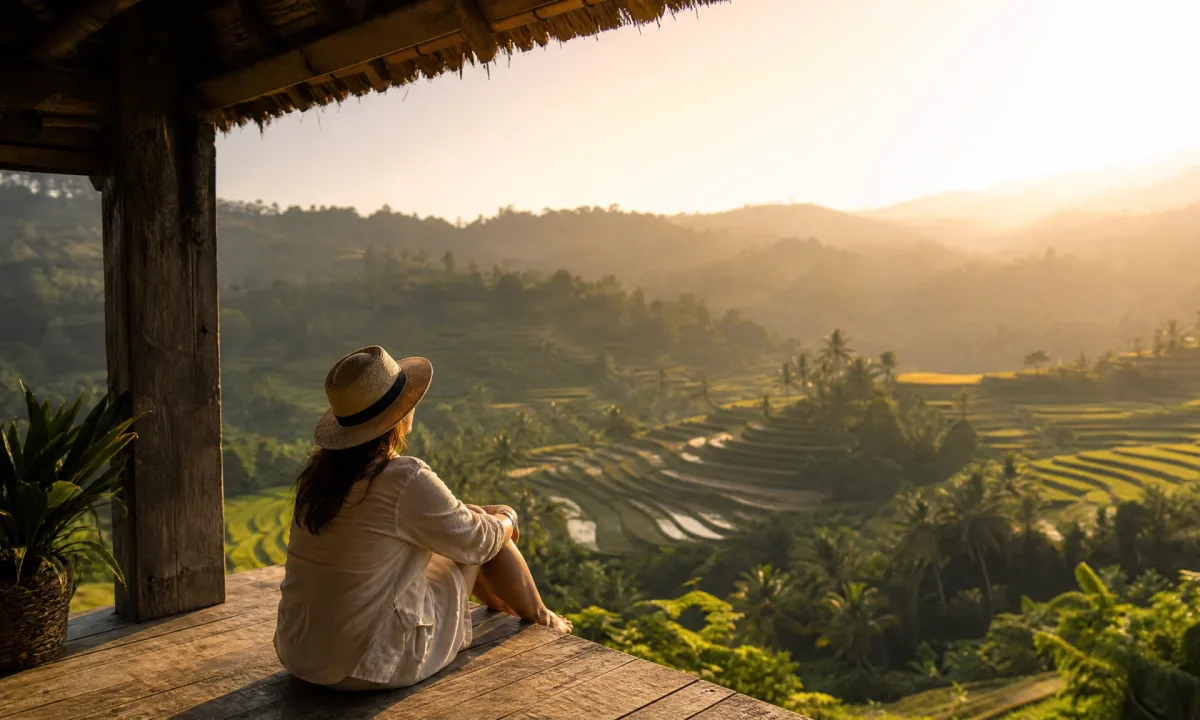
Discover Nepal: Everything You Need to Know
From the soaring Himalayas and ancient temples to vibrant cultures, wildlife, and unforgettable adventures, discover what makes Nepal one of South Asia’s most extraordinary destinations.


Nepal is a small South Asian country with an extraordinary range of landscapes, cultures, people, and experiences. It lies between India to the south, east, and west and China to the north. For many people, Nepal is known as the home of Mount Everest or a himalayan trekking destination, but the country offers much more than its highest mountains.
From the historic cities, centuries-old temples and ancient Buddhist and Hindu heritage of the Kathmandu Valley to the lakeside streets of Pokhara, the wildlife of Chitwan or Bardiya, the pilgrimage sites of Lumbini, and the high-altitude desert landscapes of Mustang, each region offers a distinctly different side of Nepal.
So, what is Nepal known for? The short answer is the Himalayas, Mount Everest, trekking, Buddhist and Hindu heritage, colorful festivals, and its diverse people. The longer answer is that Nepal is a country where a relatively short journey can take you from subtropical plains to high Himalayan valleys.
Quick Info on Nepal
Nepal is an independent, landlocked country in South Asia, located between India and China. It is a federal democratic republic governed under the Constitution of Nepal. The country is divided into seven provinces, with three levels of government: federal, provincial, and local.
Geographically, Nepal is broadly divided into three regions: the southern Terai plains, the middle hills, and the northern mountain region.
Here are some quick facts about Nepal:
| Information | Details |
|---|---|
| Official name | Federal Democratic Republic of Nepal |
| Government | Federal democratic republic |
| Capital | Kathmandu |
| Location | South Asia, between India and China |
| Population | About 29.2 million according to the 2021 national census |
| Official language | Nepali |
| Currency | Nepalese rupee (NPR) |
| Area | About 147,516 sq. km |
| Time zone | Nepal Time (UTC+5:45) |
| Main religions | Hinduism and Buddhism, with other faiths also represented |
| Major mountain range | Himalayas, Annapurna, Everest, Langtang, Manaslu, and Mustang |
| Highest point | Mount Everest, 8,848.86 m (Highest peak of the world) |
| Major rivers | Koshi, Gandaki, Karnali |
| Main international airport | Tribhuvan International Airport, Kathmandu |
Nepal on the world map
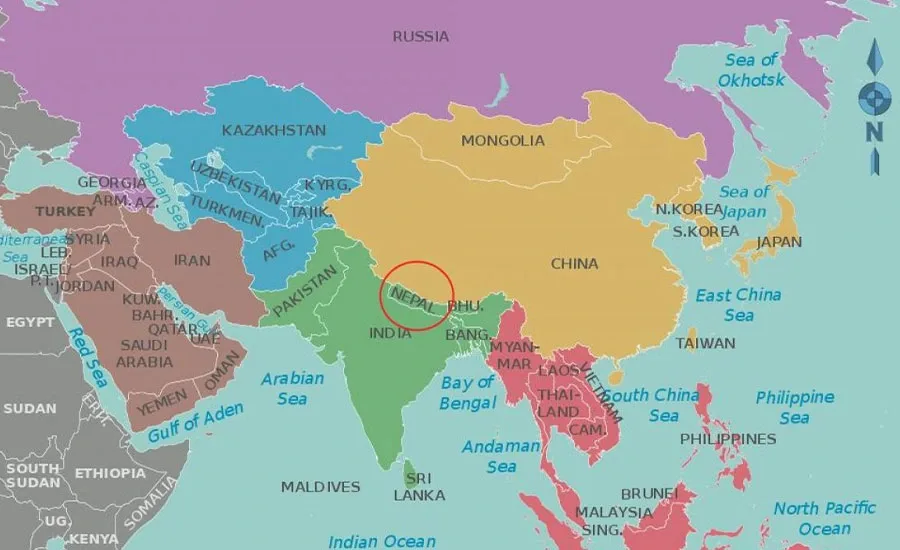
If you look for Nepal on the world map, you will find the country in the northern part of South Asia. It stretches roughly east to west along the southern side of the Himalayas.
Nepal is not a very large country by area, but has one of the most dramatic changes in elevation on Earth. The southern plains are relatively low and warm, while the north contains some of the highest mountains on Earth. Nepal's mountains rise to more than 8,000 meters, while parts of the Terai are only a few hundred meters above sea level. Eight of the world's fourteen peaks above 8,000 meters are located in Nepal.
This huge change in elevation explains why Nepal can have tropical forests, green hills, alpine meadows, glaciers, and high-altitude deserts within one country.
Kathmandu, Capital City of Nepal
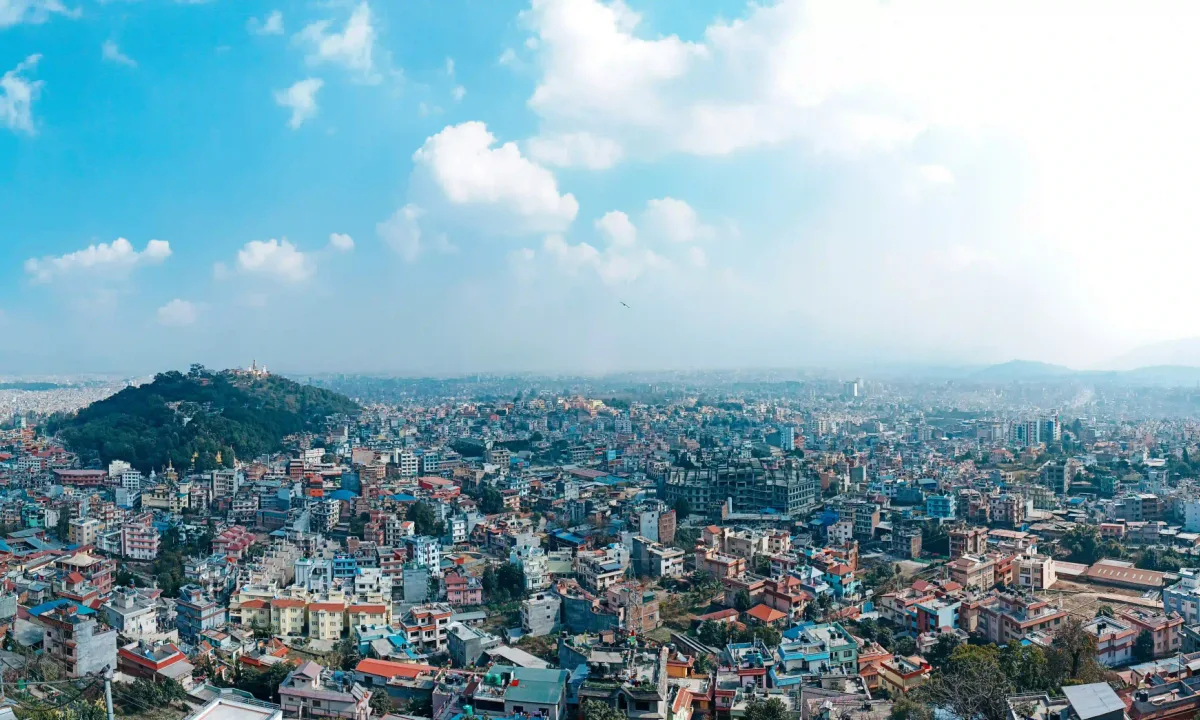
Kathmandu is the capital and largest city of Nepal. It sits in the Kathmandu Valley at roughly 1,400 meters (4,600 feet) above sea level. Kathmandu is also the country's main cultural and travel gateway, combining ancient temples and courtyards with busy streets, restaurants, hotels, shops, offices, and modern neighborhoods.
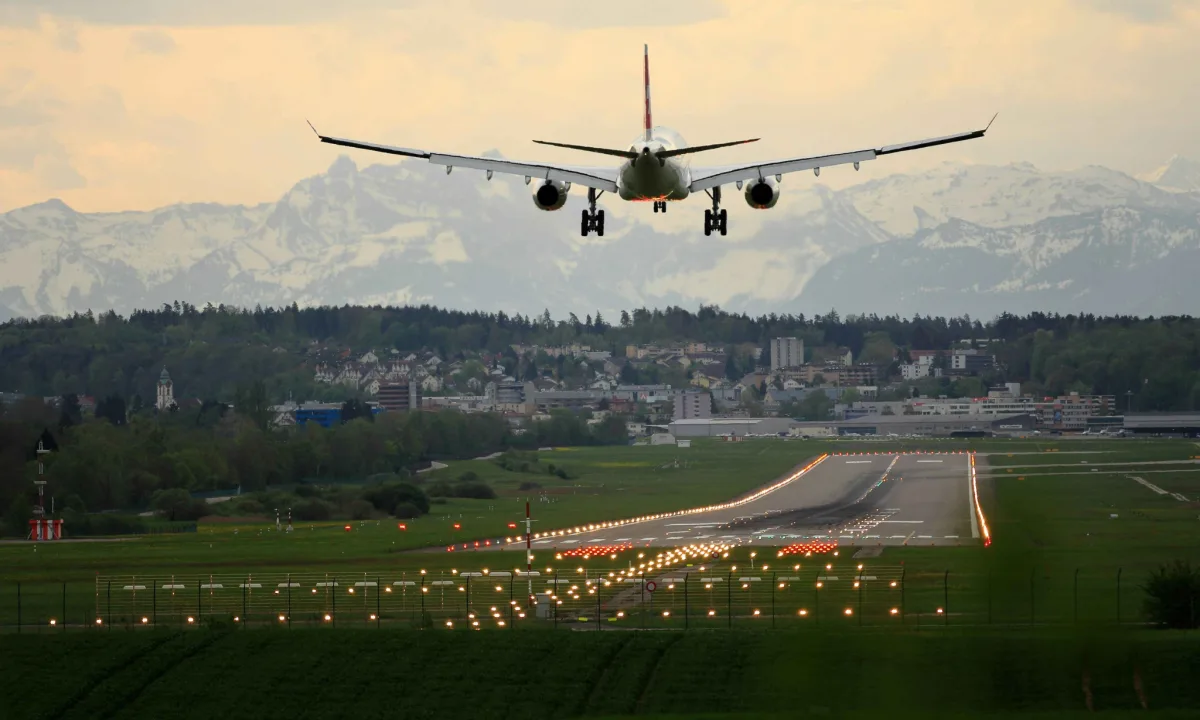
Kathmandu also serves as the country’s primary gateway for international visitors. Most travelers arriving in Nepal by air land in Kathmandu at Tribhuvan International Airport (TIA), which is located in Kathmandu. The airport handles both international and domestic flights, making it an important starting point for travelers heading to Kathmandu itself as well as popular destinations throughout the country.
10 Interesting Facts About Nepal
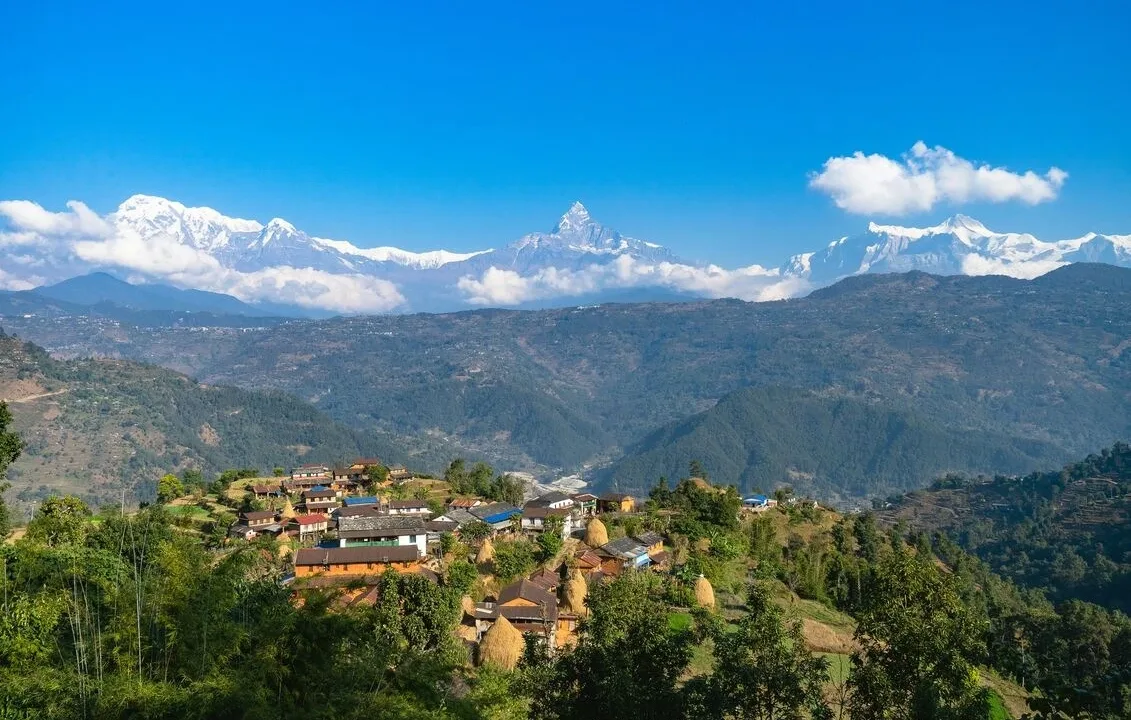
Nepal is full of more things that go beyond Mount Everest. Here are ten interesting things about Nepal that help explain why the country is so distinctive.
1. Nepal is home to Mount Everest
The most famous answer that Nepalese people answer when asked “what is Nepal famous for?” is Mount Everest.
Known in Nepal as Sagarmatha, Mt. Everest is the highest mountain on Earth that reaches 8,848.86 meters above sea level. The mountain lies along the Nepal-China border, and Nepal's Everest region is one of the world's best-known trekking destinations.
Travellers can see Everest from viewpoints, mountain flights, helicopter tours, and trekking routes without necessarily climbing the summit. The Everest Base Camp trek takes travelers through Sherpa villages, Buddhist monasteries, suspension bridges, forests, glaciers, and high mountain valleys.
2. Eight of the world's 14 highest mountains are in Nepal
Nepal’s Himalayan landscape extends far beyond Mount Everest. Nepal contains eight of the world’s 14th mountains higher than 8,000 meters: Everest, Kanchenjunga, Lhotse, Makalu, Cho Oyu, Dhaulagiri, Manaslu, and Annapurna I.
That is one of the reasons Nepal has become famous for mountaineering and high-altitude trekking. Different mountain regions offer different experiences, from the relatively busy Everest trails to quieter areas such as Manaslu, Dolpo, and Langtang. The Annapurna region is also becoming increasingly popular, attracting travelers with its stunning mountain scenery and diverse trekking routes.
3. Nepal has one of the world's most unusual national flag
Nepal's national flag is instantly recognizable because it is made from two connected triangular shapes rather than a rectangle. It is the world’s only non-rectangular national flag.
The flag includes symbols of the moon and sun and uses crimson red with a deep blue border. Its unusual shape makes it one of the most distinctive national flags in the world.
4. Nepal is the birthplace of Gautam Buddha
Lumbini, in southern Nepal near the Indian border, is one of the most important Buddhist pilgrimage sites in the world. Lumbini is traditionally recognized as the birthplace of Siddhartha Gautama, who later became known as the Buddha. The Maya Devi Temple and the Ashoka Pillar are central landmarks within the sacred area.
Today, Lumbini is an important pilgrimage destination containing temples, monasteries, gardens, and archaeological remains. Its monasteries include buildings and artistic styles connected with Buddhist communities from different countries. UNESCO lists Lumbini, the Birthplace of the Lord Buddha, as a World Heritage Site.
5. Kathmandu Valley contains 7 UNESCO world heritage sites
The Kathmandu Valley is a cultural landscape with a deep history of Newar art, architecture, trade, religion, and urban life. It contains a remarkable collection of historic cities, temples, stupas, courtyards, palaces, and religious sites.
UNESCO's Kathmandu Valley World Heritage property includes seven monument zones: the Durbar Squares of Kathmandu, Patan, and Bhaktapur, together with Swayambhunath, Boudhanath, Pashupatinath, and Changu Narayan.
This concentration of heritage is one reason travelers can spend several days in the valley without running out of places to explore.
6. Nepal combines high mountains with subtropical wildlife habitat
One of the most interesting things about Nepal is how quickly the landscape changes. The Terai in the south contains warm plains and forests. Higher up are green hills, terraced farmland, and valleys. Farther north are alpine landscapes, glaciers, and the high Himalayas.
A common funny fact about Nepal is that the same country associated with Everest also has rhinoceroses, crocodiles, deer, monkeys, and Bengal tigers.
The southern lowlands contain protected areas such as Chitwan National Park, where visitors can join nature walks, jeep safaris, and river trips. Some inner Himalayan areas, including parts of Mustang and Dolpo, are described as cold-desert landscapes with similarities to the Tibetan Plateau.
7. Nepal has a living goddess tradition
The Kumari, or living goddess, is one of Nepal's most distinctive cultural traditions. A Kumari is a young girl selected according to traditional religious and cultural practices and regarded as a living manifestation of the goddess Taleju.
The tradition is especially associated with Kathmandu and its historic Newar culture. Visitors may learn about the Kumari tradition while exploring Kathmandu's historic center, although it is important to approach religious traditions respectfully rather than treating them simply as tourist attractions.
8. Nepal uses a different calendar system alongside the Gregorian calendar
Nepal commonly uses the Bikram Sambat calendar alongside the Gregorian calendar for many official and everyday purposes. The Nepali New Year usually falls in April, although the exact date varies. Official documents, newspapers, festivals, and daily conversations may refer to dates that look different from the dates used in many international travel bookings.
For international visitors, this can be surprising at first. You may see a year beginning with "20" in Nepal when the corresponding Gregorian year begins with "20" as well but is several decades earlier in the B.S. system.
9. Nepal has experienced devastating earthquakes and rebuilt
Nepal is located in one of the world's active earthquake regions. On April 25, 2015, a magnitude 7.8 earthquake struck central Nepal, followed by another major earthquake measuring 7.3 on May 12. Together, the earthquakes caused almost 9,000 deaths, affected around 8 million people, and caused billions of dollars in physical damage.
The 2015 Nepal earthquake also damaged historic buildings and heritage sites. Reconstruction has since become an important part of Nepal's modern story, alongside ongoing efforts to improve earthquake resilience.
10. The Gurkhas are internationally respected soldiers
The word Gurkha refers to soldiers from Nepal who have served in the British Army, Indian Army, and other military forces. Their reputation for courage and discipline grew through a long history of military service. Many Nepali families have connections with the Gurkha tradition.
Gurkha history is important, but it should not reduce Nepal to a stereotype of brave mountain soldiers. Nepal is a multi-ethnic and multilingual society with many professions, communities, and regional identities. The Gurkha story is one part of a much larger national history.
Things to Do in Nepal
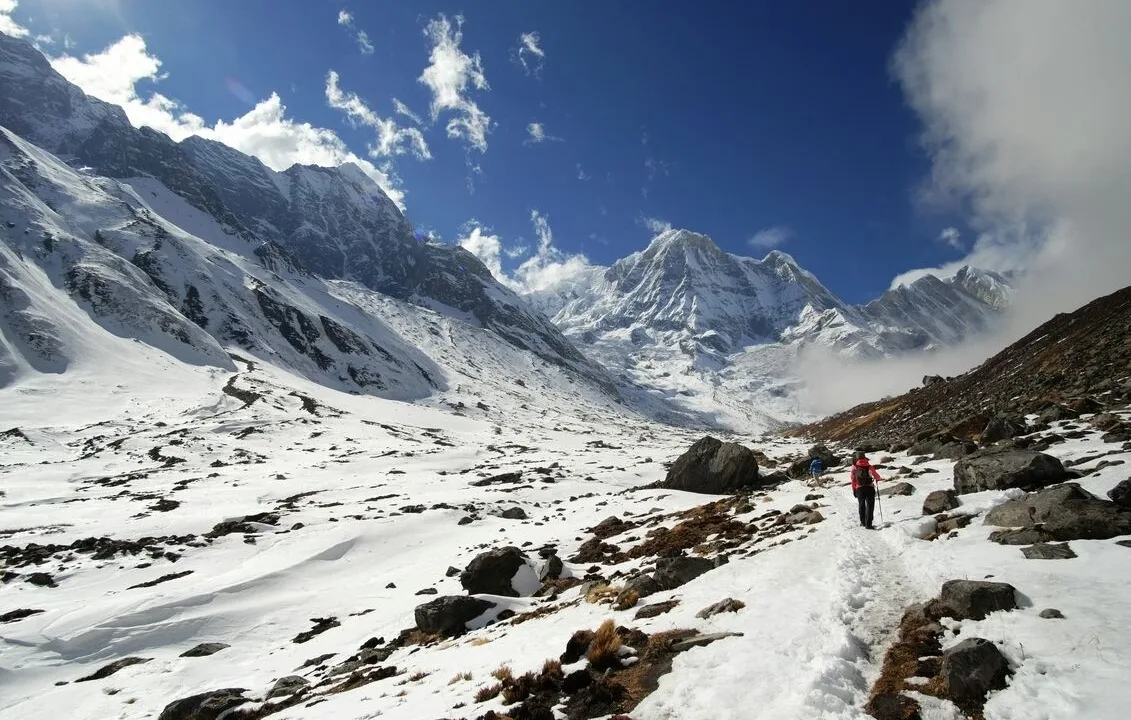
Most visitors assume that the main thing to do in Nepal is trekking. Trekking is certainly one of the country's biggest attractions, but it is only one part of the experience.
Here are some of the best experiences to consider.
1. Trek in the Himalayas
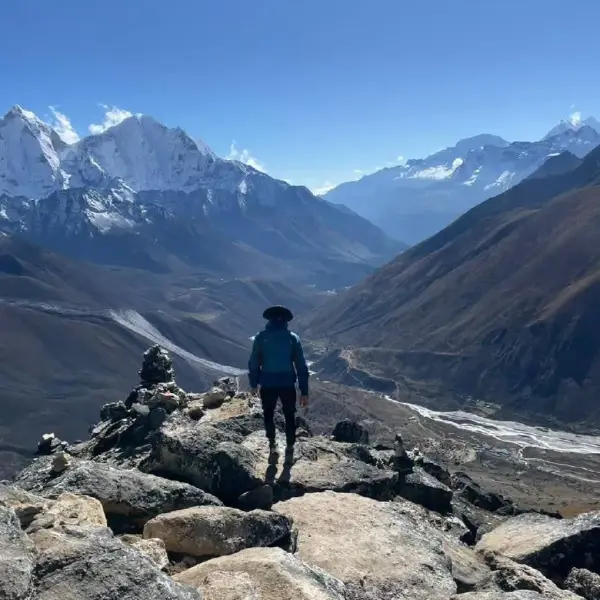
Trekking remains one of the main reasons people visit Nepal. Popular routes include the Everest Base Camp trek, Annapurna Base Camp trek, Annapurna Circuit, Langtang Valley, Manaslu Circuit, along with several shorter hiking routes around Pokhara and Chitwan.
Trekking in Nepal is not simply about reaching a destination. The journey usually passes through villages, forests, rivers, monasteries, farms, and mountain settlements. Because altitude can become a serious issue, high-altitude trekking should be planned carefully. Acclimatization days, appropriate pacing, weather awareness, and professional guidance can make a major difference.
The Everest Base Camp route is especially famous because it combines mountain scenery with Sherpa culture. Namche Bazaar, one of the best-known settlements in the Khumbu region, is an important stopping point for trekkers traveling toward Everest.
2. Explore Kathmandu's temples and historic streets
Kathmandu deserves more than a quick overnight stay before a trek. Walk through the old streets, visit courtyards, observe artisans at work, and explore the major religious sites across Kathmandu valley.
Spend time around the historic Asan bazaar area to explore ancient streets and traditional Newari culture. Explore Boudhanath, Swayambhunath, and Pashupatinath, popular UNESCO listed religious sites in Nepal.
Boudhanath Stupa is one of the city's most recognizable landmarks. Visitors can walk clockwise around the stupa, spin prayer wheels, and watch daily devotion, while following rules about photography and respectful behaviour. Swayambhunath, often called the Monkey Temple, stands on a hill above the city. Pashupatinath is a major Hindu temple complex on the Bagmati River.
3. Visit Patan and Bhaktapur
Patan, also known as Lalitpur, and Bhaktapur are historic cities within the Kathmandu Valley.
Patan is particularly known for its traditional Newar architecture, metalwork, woodcarving, courtyards, temples, and Patan Durbar Square. Bhaktapur has a different atmosphere, with historic squares, brick streets, temples, traditional buildings, and famous Newari foods.
Together with Kathmandu, these cities show why the Kathmandu Valley is considered such an important cultural landscape. UNESCO's listing recognizes the three historic urban centers and their surrounding religious monuments as part of the valley's outstanding cultural heritage.
4. See the Himalayas without doing a long trek
Not every traveler wants to spend two weeks walking through the steep hills, crossing rivers to look at the mountains. Fortunately, Nepal offers other ways to see the Himalayas. Mountain flights, scenic viewpoints, short hikes, and helicopter sightseeing can provide dramatic mountain views without a long trek.
From Kathmandu, travellers may book a mountain flight or take a scenic helicopter trip, subject to weather and local operating conditions. Around Pokhara, Sarangkot and the World Peace Pagoda provide accessible viewpoints. A mountain flight is useful for visitors with limited time, older travellers, families, or people who cannot manage a long trek. The experience is different from walking through the landscape, but it still reveals the scale of the Himalaya.
5. Go paragliding in Pokhara
Pokhara is one of Nepal's most popular destinations for a reason. The city sits beside Phewa Lake and is surrounded by dramatic mountain scenery. It is also a major base for trekking in the Annapurna region.
Pokhara is also Nepal’s main adventure-sports centre. Travelers can take a boat on the lake, visit the World Peace Pagoda, walk around the Lakeside district, explore caves and waterfalls, or simply rest after a trek. For adventure travelers, tandem paragliding offers a completely different view of the landscape. Instead of looking at the mountains from a trail, you can look across the lake, hills, villages, and Himalayan skyline from the air.
Pokhara also works well for travelers who want a slower trip. Cafés, lakeside walks, boating, yoga, cycling, and short hikes make it possible to enjoy Nepal without spending every day on a mountain trail.
6. Take a wildlife safari in Chitwan
Chitwan shows that Nepal is not only a mountain destination. It offers a completely different view of Nepal.
Chitwan National park, a UNESCO World Heritage Site contains forests, grasslands, rivers, and wetlands and is known for wildlife including the greater one-horned rhinoceros, crocodiles, wild elephants, and many bird species. With luck, visitors may also see a Bengal tiger.
This contrast is one of the best reasons to include Chitwan in a Nepal itinerary. You can go from the high Himalayas to subtropical jungle landscapes within the same country. Activities may include jeep safaris, guided nature walks, canoe trips, and visits to nearby Tharu communities.
7. Visit Lumbini
For travelers interested in religion, history, or archaeology, Lumbini is one of Nepal's most significant destinations. The sacred area includes the Maya Devi Temple and the Ashoka Pillar, monasteries, gardens, and archaeological remains associated with the Lord Buddha's birth. Now, the wider development includes monasteries built by Buddhist communities from different countries
Lumbini is also a good reminder that Nepal's history cannot be reduced to mountains and adventure. Its religious heritage reaches across South Asia and has importance for Buddhist communities around the world.
8. Explore Mustang
Mustang is one of the most visually unusual regions of Nepal. It is a dry, high-altitude region in north-central Nepal with dramatic cliffs, red and grey valleys, caves, monasteries, and landscapes shaped by Tibetan cultural influence.
The landscape changes dramatically as you move north of the main Himalayan ranges. The region includes the historic area of Upper Mustang and the pilgrimage destination of Muktinath. Lower Mustang, around Jomsom and Marpha, is more accessible, while Upper Mustang requires special permits and careful planning.
9. Try rafting, bungee jumping, and other adventure activities
Nepal’s rivers descend quickly from the mountains, creating opportunities for white-water rafting and kayaking. The Trishuli River is one of the more accessible choices from Kathmandu, while other rivers offer longer and more challenging expeditions. Bungee jumping, canyoning, ziplining, and mountain biking are also available in selected areas.
Adventure activities carry real risk. Check the operator’s safety record, equipment, insurance requirements, weather policy, and rescue plan. Do not choose an activity only because a blog calls it extreme or exciting.
10. Experience Nepali food
Food is one of the easiest ways to connect with Nepal and understand its culture.
Try dal bhat, a daily staple of Nepal, the combination of rice, lentil soup, vegetables, and other sides. As locals say “Daal bhat power 24 hour”, you’ll feel energized throughout the day. You will also find momo, Nepal's much-loved dumplings, in restaurants and street-food spots across the country.
Other foods worth trying include Newari dishes in the Kathmandu Valley includes dishes such as bara, yomari, chatamari, and a variety of spiced vegetables and meats. Food can also vary greatly between communities and regions, so do not assume that "Nepali food" is just one style of cooking. Thakali meals are common along routes near Mustang and the Annapurna area, while the Terai has strong links with Maithili, Bhojpuri, and Indian culinary traditions.
11. Experience festivals and local culture
Nepal's cultural calendar is exceptionally diverse because the country is home to 142 ethnic groups, combining different linguistic, and religious communities.
Depending on the season, travelers may encounter festivals such as Dashain, Tihar, Indra Jatra, Holi, Loshar, Buddha Jayanti, or local festivals unique to particular communities. Kathmandu Valley comes alive throughout the year with Jatras, centuries-old street festivals unique to the Newar community. Events like Indra Jatra and Bisket Jatra transform ancient city squares into vibrant spectacles.
A good cultural experience does not always require attending a major festival. Visiting a local market, observing a traditional craft, staying in a community homestay, or simply walking through an old neighborhood can provide a more everyday view of Nepal.
12. Relax with yoga, meditation, or wellness experiences
Nepal has long attracted visitors interested in meditation, spirituality, yoga, and wellness. Pokhara and Kathmandu are especially popular for yoga classes, meditation retreats, Ayurvedic treatments, and spiritual experiences.
Visitors can participate in transformative silent meditation courses (Vipassana Meditation) at renowned centers like Dhamma Shringa in the peaceful hills outside Kathmandu. Or, you can spend a few days at active spiritual hubs like Pharphing Gumba to experience daily monastic life, study Buddhist philosophy, and practice meditation in an authentic environment.
The important thing is to choose experiences that are respectful of the traditions from which they come rather than treating them only as travel trends.
Major Tourist Attractions of Nepal
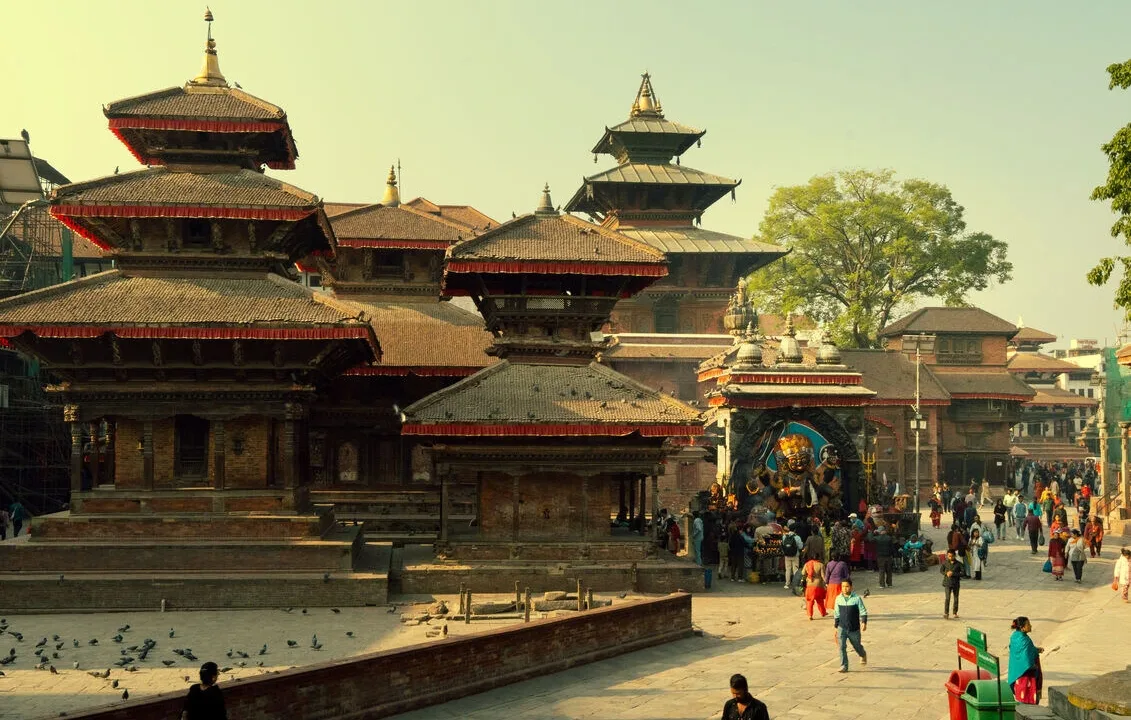
Nepal's major attractions can be divided into several broad categories: Himalayan destinations, historic cities, religious sites, wildlife areas, and unique landscapes.
1. Kathmandu Valley
The Kathmandu Valley should be near the top of any first-time Nepal itinerary. It is the arrival point and the country’s cultural centre.
The valley contains the country's capital, Kathmandu, as well as historic cities of Patan and Bhaktapur. The valley is also home to major religious and historic landmarks including Boudhanath, Swayambhunath, Pashupatinath, and Changu Narayan, these places form the seven monument zones recognized by UNESCO.
2. Mount Everest and Everest region
Mount Everest is Nepal's most famous natural attraction. The surrounding Everest region contains high mountain valleys, glaciers, monasteries, Sherpa settlements, and trekking routes. Even if you never climb the mountain, traveling through the Everest region can be a major travel experience in itself.
The Everest region is Nepal’s most famous mountain destination. Trekkers generally fly or travel toward Lukla before walking through villages, forests, suspension bridges, and high valleys. Namche Bazaar is an important stop for acclimatization and trade. Beyond it, the route leads toward Tengboche, Dingboche, Lobuche, and Everest Base Camp, depending on the chosen itinerary.
3. Pokhara
Pokhara is Nepal’s adventure and relaxation hub, set beside the peaceful Phewa Lake with spectacular views of the Annapurna and Dhaulagiri ranges. It is a major gateway to popular treks, including the Annapurna Base Camp and Annapurna Circuit.
Visitors can enjoy peaceful boat rides on Phewa Lake, sunrise views from Sarangkot, paragliding, and visits to Davis Falls, caves, and the World Peace Pagoda. The vibrant Lakeside area is the heart of Pokhara, lined with cafés, restaurants, hotels, shops, and wellness centers. Whether you seek adventure or relaxation, Pokhara offers an ideal mix of nature, mountain views, and laid-back lakeside experiences.
4. Annapurna Region
The Annapurna region is one of Nepal's most popular trekking areas. It offers a huge variety of landscapes, from green valleys and terraced farmland to high mountain passes and barren Himalayan terrain.
The region is especially attractive because travelers can choose from routes of different lengths and difficulty levels. The Annapurna Base Camp route is one of Nepal’s best-known treks. It is not the same experience as Everest Base Camp: the scenery, communities, route profile, and access are different.
5. Chitwan National Park
Chitwan is one of Nepal’s best-known wildlife attractions. Characterized by dense subtropical forests, tall elephant grass, and meandering rivers, Chitwan National park is home to endangered species like the one-horned rhinoceros and the Royal Bengal Tiger. A guided jungle safari here provides a rich nature-focused contrast to Himalayan adventures.
6. Lumbini
Lumbini is globally known as the birthplace of Siddhartha Gautama, the Buddha, making it one of the world's most significant Buddhist pilgrimage sites. The Maya Devi Temple marks the central sacred area, and the Ashoka Pillar is associated with the ancient history of Buddhist pilgrimage.
The sacred garden and surrounding monasteries provide a quieter experience than many of Nepal's busier tourist centers. Its World Heritage status reflects its international religious and historical importance.
7. Boudhanath Stupa
Boudhanath is one of Kathmandu's defining landmarks and one of the most important Buddhist sites in Nepal. The stupa is surrounded by monasteries, shops, restaurants, prayer wheels, and streets used by both local residents and pilgrims.
Walk around the stupa in a clockwise direction, observe worshippers without interrupting them, and keep voices low near prayer areas. For many visitors, walking around the stupa while observing the daily religious activity is one of the most memorable experiences in Kathmandu.
8. Pashupatinath Temple
Pashupatinath is Nepal's most sacred Hindu temple complex dedicated to Lord Shiva. The temple complex lies beside the Bagmati River and remains an active center of worship and pilgrimage. As a living site of continuous worship, cremation ghats, and ascetic sadhus, it provides deep insight into Hindu death rituals and philosophy.
Some areas of Pashupatinath are restricted to non-Hindu visitors, but the wider surroundings can still be viewed respectfully. As this is a living religious site, visitors should be especially careful about photography, access restrictions, and local customs.
9. Swayambhunath Stupa
Swayambhunath Stupa, also known as “Monkey Temple”, sits on a hill overlooking Kathmandu. Its white stupa, golden spire, prayer flags, temples, shrines, and resident monkeys have made it one of the city's most recognizable attractions. The complex blends Buddhist and Hindu shrines seamlessly within a single sacred space. It is also one of the seven monument zones included in UNESCO's Kathmandu Valley World Heritage property.
10. Bhaktapur Durbar Square
Bhaktapur is famous for its historic architecture and traditional Newar culture. Bhaktapur durbar square is a living open-air museum of medieval Newar art, architecture, and urban design. The city's Durbar Square contains temples, palace buildings, courtyards, and intricate architectural details. Architectural masterpieces such as the 55-Window Palace, the intricate Golden Gate, and the towering multi-tiered Nyatapola Temple, are the major attractions of Bhaktapur.
11. Patan Durbar Square
Patan, or Lalitpur, is another major cultural attraction in the Kathmandu Valley. Patan Durbar square is known for temples, courtyards, stone and metal sculptures, traditional architecture, and craft traditions. Known as "City of Fine Arts", Patan showcases some of the finest Newari stone, metal, and wood craftsmanship in existence.
Patan is close enough to Kathmandu to visit as a day trip, but spending more time there allows travelers to experience the city at a slower pace.
12. Mustang and Muktinath
Mustang offers a striking combination of mountain scenery, Tibetan-influenced culture, ancient settlements, and dry Himalayan landscapes. Muktinath, located at high altitude, is an important pilgrimage site for both Hindus and Buddhists. The wider Mustang region is ideal for travelers looking for dramatic canyon walls, and ancient cave dwellings that feel very different from the green hills around Kathmandu and Pokhara.
13. Janakpur
Janakpur is an important religious and cultural city in Nepal's southern plains. It is closely associated with the Hindu epic Ramayana and is particularly known for the Janaki Mandir, a large and ornate temple dedicated to Sita.
The city offers another perspective on Nepal's cultural diversity and is very different from the Himalayan destinations that dominate international images of the country.
Other less-visited areas include the Langtang region, Manaslu, Rara Lake, Ilam, Bandipur, Tansen, and the far-western national parks. These places may require more travel time, permits, local transport, or advance planning, but they can provide a quieter experience.
Is Nepal Worth Visiting?
For most travelers, yes, especially if you enjoy mountains, culture, history, nature, or adventure.
But Nepal does not need to be treated as a destination only for serious trekkers. A visitor can enjoy the country without climbing a mountain or completing a multi-week trek.
You can explore the Kathmandu Valley, take a scenic mountain flight, relax beside Phewa Lake, go on safari in Chitwan, visit Lumbini, explore Mustang, try Nepali food, or spend time in a village.
The best trip depends on what you want from Nepal.
If mountains are your priority, look toward Everest, Annapurna, Langtang, or Manaslu. If culture is more important, spend time in Kathmandu, Patan, Bhaktapur, and surrounding historic communities. If wildlife interests you, add Chitwan or Bardiya. If you want a slower trip, Pokhara, Bandipur, and smaller hill towns can offer a more relaxed experience.
Conclusion
Nepal is much more than the country where Mount Everest stands. It is a country of extreme geographical contrasts, ancient cities, living religious traditions, diverse communities, wildlife-rich lowlands, high Himalayan valleys, and rapidly changing modern cities. Its small size makes the variety even more remarkable.
The Himalayas may be what first attracts people to Nepal, but the culture, food, landscapes, people, and history are what often make the country memorable. Whether you arrive looking for trekking in Nepal, cultural exploration, wildlife, spirituality, adventure, or simply a new place to experience, Nepal has plenty to discover.
Ready to turn your Himalayan dreams into reality? Whether you are planning a thrilling trek to Everest Base Camp, a tranquil retreat by Phewa Lake, or a deep dive into the rich cultural heritage of Kathmandu Valley, Travories is here to help you craft the perfect itinerary. Let us guide your next unforgettable adventure through the heart of Nepal with expert insights, customized tours, and seamless travel planning!
Frequently Asked Questions (FAQs)
1. Do I need a visa to visit Nepal?
Yes, most international travelers need a visa to enter Nepal. Tourist visas can easily be obtained upon arrival at Tribhuvan International Airport in Kathmandu or at designated land border crossings. You can also apply online in advance through the official Department of Immigration website. Visas are typically available for 15, 30, or 90 days.
2. What is the best time of year to visit Nepal?
The best times to visit Nepal are during the spring (March to May) and autumn (September to November).
- Autumn offers clear blue skies, stable weather, and great mountain visibility, making it the peak season for trekking.
- Spring brings blooming rhododendrons, warmer temperatures, and vibrant festival celebrations. Winter and summer (monsoon season) are possible, but winter can be very cold at high altitudes, and the monsoon brings heavy rainfall and obstructed mountain views.
3. Is Nepal safe for solo and first-time travelers?
Yes, Nepal is generally considered a safe and welcoming destination for solo and first-time travelers. Nepalese people are famously hospitable and warm. However, standard travel precautions apply: keep an eye on your belongings in crowded areas, avoid walking alone in isolated places late at night, and ensure you use licensed, reputable guides for trekking and adventure sports.
4. Do I need to be an experienced hiker to visit Nepal?
Not at all. While Nepal is world-famous for grueling high-altitude expeditions like Everest Base Camp, it also offers plenty of easy day hikes, cultural walks, and leisurely travel experiences. You can easily enjoy Kathmandu, Pokhara, Chitwan National Park, and Lumbini without ever doing a multi-day trek.
5. What currency is used in Nepal, and can I use international credit cards?
The official currency is the Nepalese Rupee (NPR). While major hotels, restaurants, and shops in Kathmandu and Pokhara accept credit cards. But more often cash is preferred throughout the country, especially in rural areas, teahouses along trekking routes, and local markets. It is always wise to carry enough Nepali cash before heading out of major cities, as ATMs can be unreliable or scarce in remote regions.
Traveller and Co-founder of Travories.
Comments
Join the conversation and share your thoughts.
Loading comments…