Annapurna Base Camp Trek: Everything Nobody Tells You Before You Go
The real costs, the hard parts, the altitude truth, and what a day actually feels like, from someone who's done it.

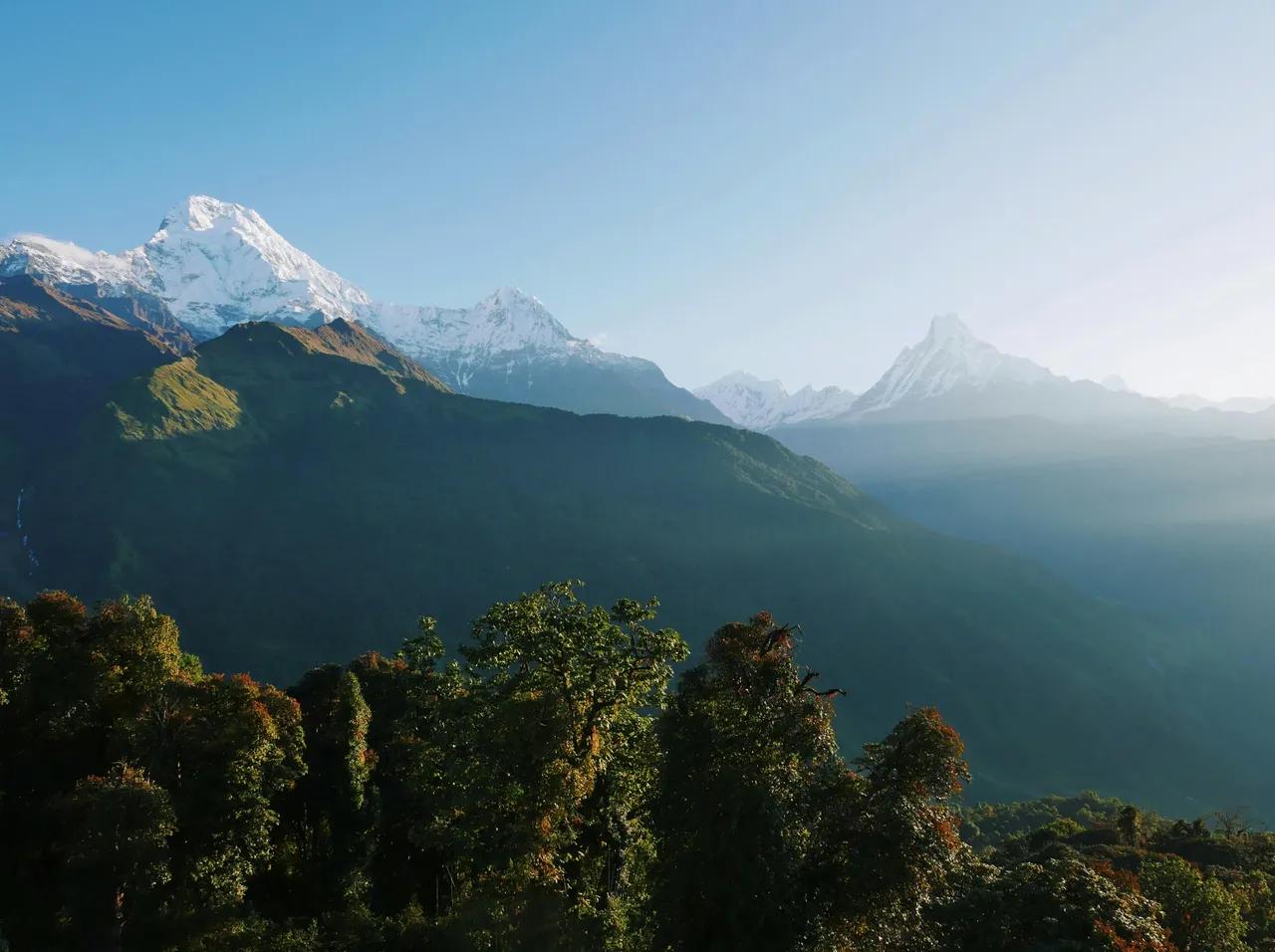
I'm going to be straight with you. I read about thirty Annapurna Base Camp trek guides before I went. Every single one said it was "moderate difficulty" and "perfect for beginners" and "a must-do Himalayan experience". None of them told me about the 3,200 stone steps at Ulleri that made my knees feel like they belonged to someone twice my age. None of them mentioned that the toilet at Deurali would be a hole in the ground with no door and that the wind chill would make me question every life decision I'd ever made. And absolutely none of them warned me that I'd be crying actual tears, not exaggeration, when I saw Annapurna; I turn gold at sunrise from base camp. So here's the guide I wish I'd had. Not the polished one. The real one.
Let's start with the question you're actually asking
You want to know if you can do this trek. Not in a vague "it's suitable for most fitness levels" kind of way, but actually, honestly, can YOU do it?
Here's my answer: if you can walk uphill for five hours with a daypack, you can do the ABC trek. That's the real benchmark. Not whether you can run a marathon or do fifty pushups. It's about sustained, plodding, uphill walking.
The trek is 7–12 days, depending on your route. You start at around 1,000 metres in Nayapul and end at 4,130 metres at Annapurna Base Camp. That's a big altitude gain, but you're doing it gradually – a few hundred metres per day. Your body adapts.
The hardest physical day is usually the Tikhedhunga-to-Ghorepani stretch (if you take the Poon Hill route) or the Jhinu Danda-to-Chhomrong climb. Both involve thousands of stone steps going straight up. My calves burned for three days after Ulleri. But I also watched a 62-year-old Japanese woman do the same steps without stopping, so. Fitness is relative.
What nobody tells you: the mental part is harder than the physical part. Day four or five, when you're tired, and the novelty has worn off, and your back hurts, and the dal bhat is starting to taste the same – that's when people want to quit. You push through, and then on day six, you walk into the Annapurna Sanctuary, and everything changes.
What does a day actually look like?
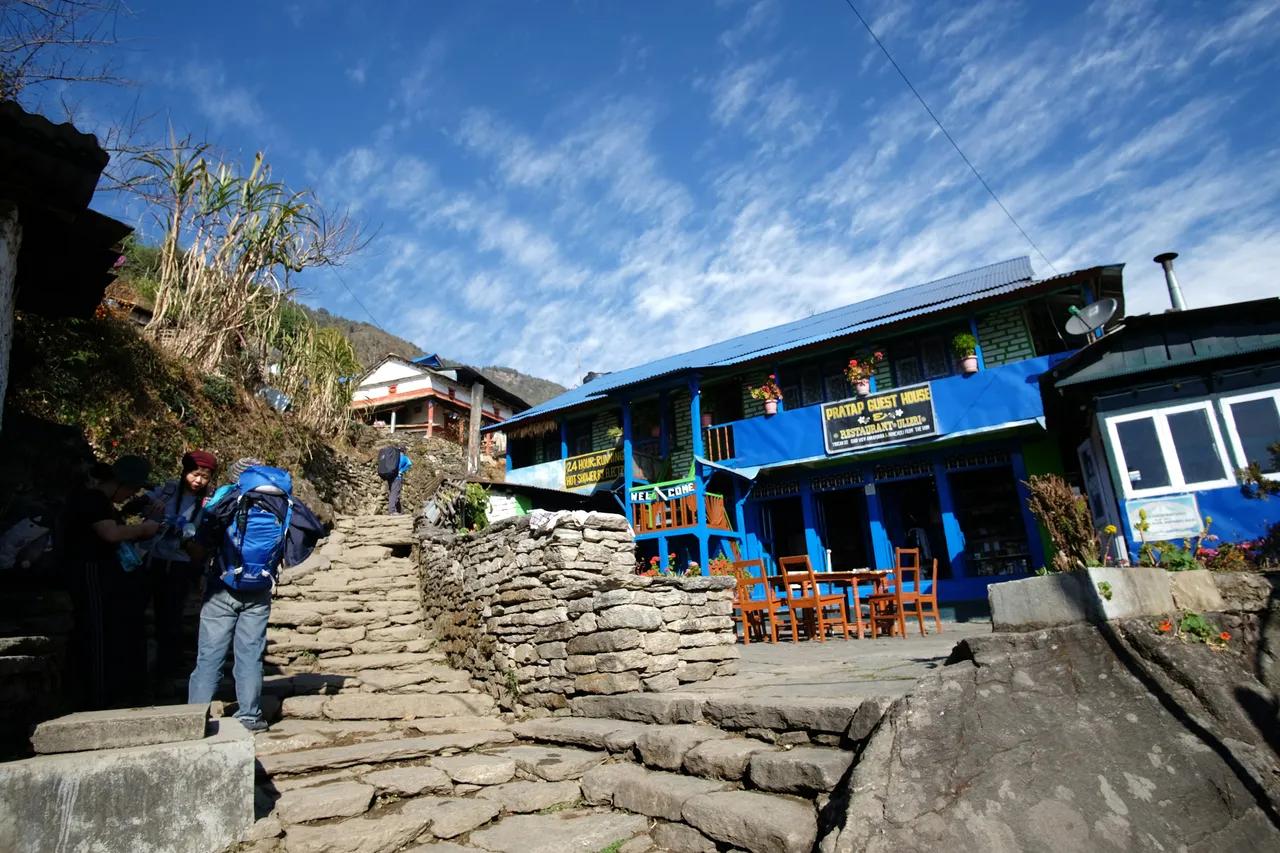
Nobody writes about this, and it's the thing I most wanted to know before I went. So here's a typical day, unfiltered:
5:30 AM — Your alarm goes off. The room is cold. Like, see-your-breath cold. You're wearing every layer you own inside your sleeping bag, and you don't want to leave it. But you do, because the sunrise is worth it, and your guide has already ordered your breakfast.
6:00 AM — Breakfast. A normal breakfast, if you're smart, porridge or eggs or even the Gurung Breakfast if you need variety. Nepali chiya sweet, milky, cardamom-spiced tea that costs Rs 50-Rs 100 and is the best thing on the trail. You fill your water bottles. You put on sunscreen.
6:30 AM — Walking. The trail varies day to day. Sometimes it's flat riverside paths. Sometimes it's stone steps that go straight up for two hours. Sometimes it's narrow dirt trails through rhododendron forest with Machapuchare floating above the treeline.
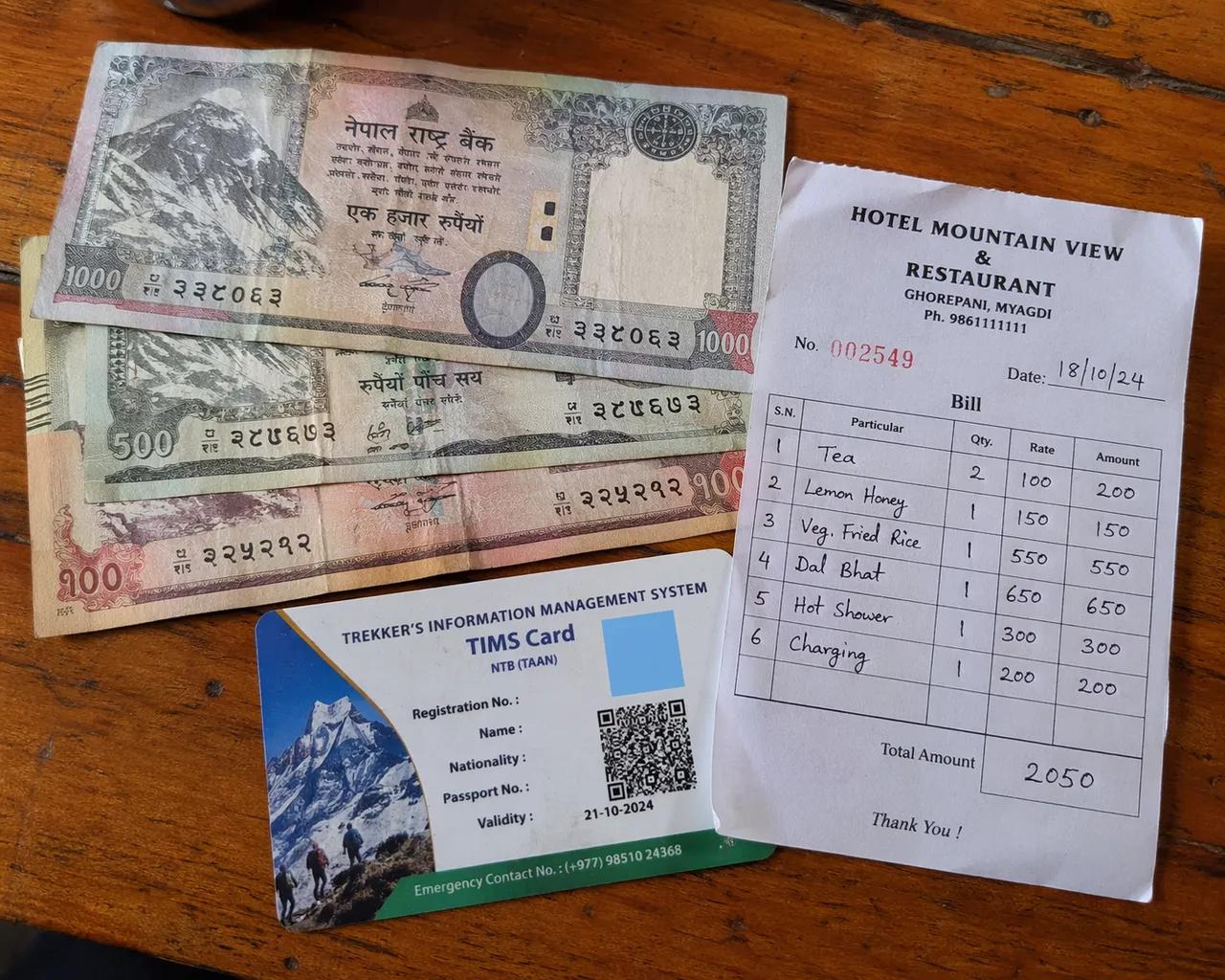
You walk for about two hours, then stop for chiya at a teahouse. Walk another two hours, stop for lunch. Dal bhat again, or maybe fried noodles. Lunch break is 45 minutes to an hour long. You sit in the sun if there is any. You charge your phone if the lodge has power (Rs 100–300 per device).
After lunch, another two to three hours of walking. By 2 or 3 PM, you're at the next lodge. Your guide checks you in, and you pick your room. Rooms are simple: two beds, a thin mattress, a pillow. Shared bathroom down the hall.
4:00 PM — Free time. Most people sit in the dining room, drink tea, play cards, and write in their journals. The dining room has a wood-burning stove in the middle. This is the only warm place in the whole building. Everyone gravitates toward it.
6:30 PM — Dinner. You order from a menu that looks the same at every lodge. Dal bhat, momos, fried rice, noodle soup, maybe pizza at lower elevations. You eat, you talk to other trekkers, you order breakfast for tomorrow.
8:00 PM — Sleep. Nobody stays up late. You're exhausted. You crawl into your sleeping bag. You hear the wind. You set your alarm. Repeat.

Altitude sickness — the thing everyone worries about
I worried about altitude sickness more than anything before my trek. I'd read horror stories. I'd Googled "Annapurna Base Camp altitude sickness" at 2 AM multiple times.
Here's what actually happened: I got a mild headache at Machhapuchare Base Camp (3,700m). It felt like a dull pressure behind my eyes. I drank two extra litres of water and took it slow, and it faded by evening. At Annapurna Base Camp (4,130m), I felt slightly out of breath walking uphill. That's it.
But I also watched a fit, young, muscular guy get evacuated by helicopter from MBC because he'd pushed too hard, skipped a rest stop, and ignored a headache that turned into vomiting and confusion. Altitude sickness has nothing to do with fitness. It's about how fast you ascend and how your body responds. You can't train for it.
The rules are simple and non-negotiable: Drink at least 3–4 litres of water per day above 3,000 m. More than you think you need. The dry mountain air dehydrates you fast.
Don't gain more than 500m of sleeping altitude in one day above 3,000m. The standard itinerary handles this for you; follow it.
If you have a headache that won't go away with water and rest, go down. Not tomorrow. Today. Descending just 300–500m can eliminate symptoms.
Diamox (acetazolamide) works for some people as a preventive. I took 125mg twice daily starting from Chhomrong. Some trekkers don't bother. Talk to your doctor before the trek, not your Instagram.
The truth? Most people on the ABC trek feel fine. Maybe a headache, maybe some shortness of breath. Serious cases are rare if you follow the itinerary and stay hydrated. But don't be stupid about it; altitude is the one thing on this trek that can actually hurt you.
""My guide told me something I'll never forget: the mountain will always be there tomorrow. But if you push past your limits today, you might not be. There's no shame in going slow.""
The real cost — no fluff, actual numbers
Every website gives you a different number. Here's what I actually spent on a 10-day ABC trek in 2026, starting and ending in Pokhara:
Permits: NPR 3,000 (ACAP) + NPR 2,000 (TIMS) = about USD 37 total. Got them in Pokhara in 30 minutes. Needed two passport photos and a passport copy.
Guide: USD 30 per day x 10 days = USD 300. My guide spoke great English, knew every lodge owner by name, carried a first aid kit, and called ahead to book rooms. Worth every rupee.
Porter: USD 20 per day x 10 days = USD 200. Carried my main bag (about 12kg). I just had a daypack with water, snacks, sunscreen, and my camera. If you're trekking with a partner, you can share one porter.
Food and accommodation on the trail: About USD 30 per day. Rooms cost Rs 500–1500 per night (free at many lodges if you eat there). Meals run Rs 500–1000 per dish. Dal bhat is always the cheapest and the most filling. A plate at Chhomrong is about Rs 500; at ABC it's Rs 800–1000.
Transport: Pokhara to Nayapul by local bus — Rs 300 (under USD 3). Or a shared jeep to Ghandruk/Kimche for USD 15–25.
Extras: Phone charging (Rs 100–300/device), hot shower (Rs 200–500; skip it above). Bamboo (the water is barely warm anyway); beer (Rs 500–900, prices go up with altitude); tips for guide and porter (USD 80–120 total are standard).
My total: approximately USD 800 for 10 days, all-in from Pokhara. That's mid-range comfortable but not luxurious. A budget trekker could do it for USD 500–600. A luxury package with helicopter return runs USD 1,500–2,000.
Compare packages on Travories to see what different agencies include — the biggest cost variation is in what's bundled versus what's extra.
The day you arrive at base camp
I want to describe this because it's the moment that makes the entire trek worth it, and no photo does it justice.
You leave Machhapuchare Base Camp around 6 AM. The trail is flat-ish, a gentle incline through a barren, rocky valley. The air is thin. You can feel it. Every fifty steps, you stop and breathe. It's not painful, just... noticeable.
And then the valley opens.
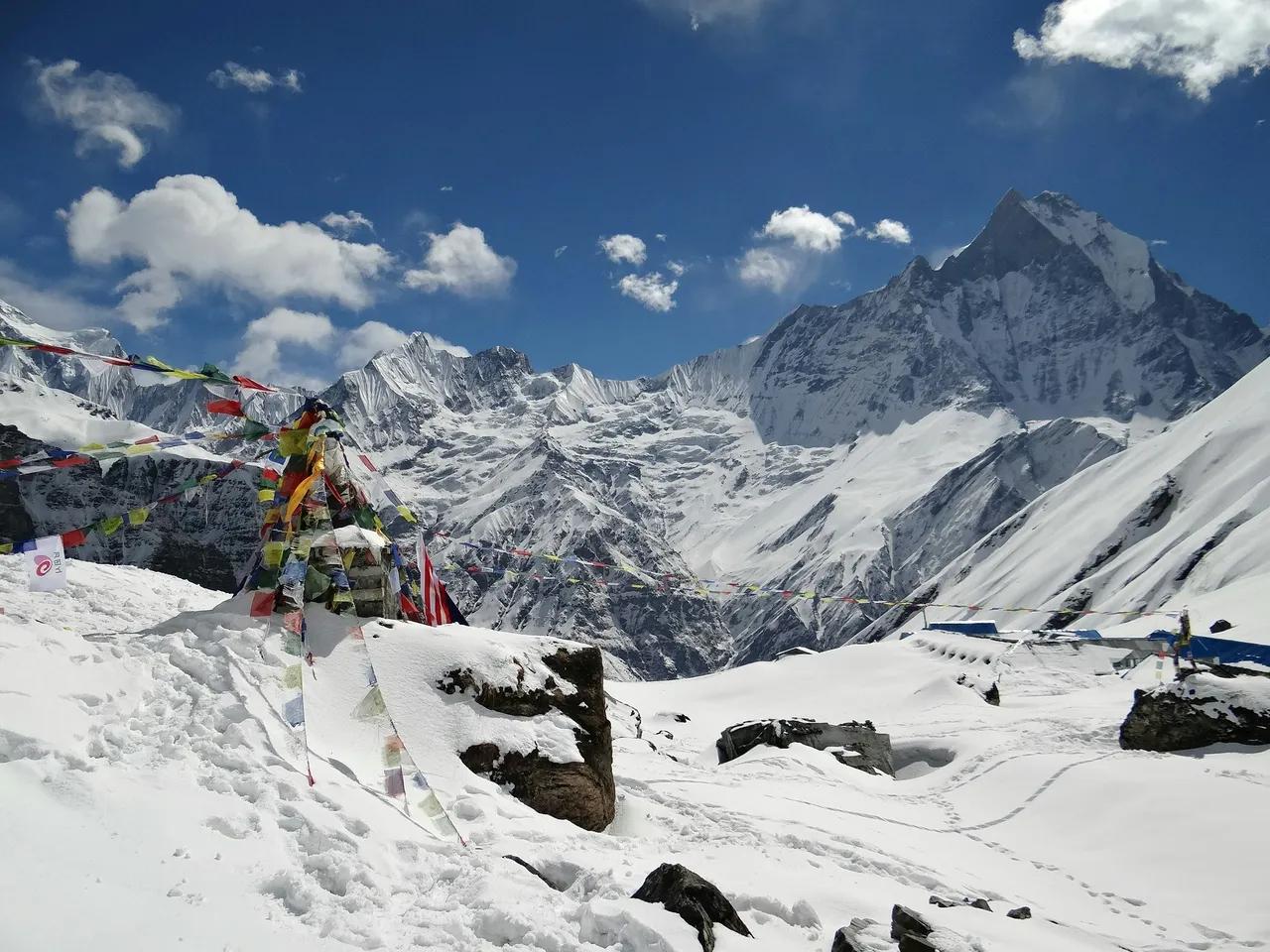
You turn a corner, and suddenly you're standing in an amphitheatre of mountains. Annapurna I — 8,091 metres, the tenth highest mountain in the world, is directly in front of you. Annapurna South is to your right. Machapuchare – the perfect fishtail peak is behind you. Hiunchuli, Gangapurna, the Fang – they're all there, surrounding you in a 360-degree wall of white.
The base camp itself is a cluster of stone lodges at 4,130 metres. There's no dramatic summit marker. No grand entrance. Just a flat area with prayer flags, some lodges, and the most insane mountain views you'll ever see in your life.
I got there at 8:30 AM. The sky was so blue it looked fake. The sun hit Annapurna. I turned the face gold, then white, then blindingly bright. I sat on a rock and cried. Not from exhaustion from the sheer overwhelming scale of it. You feel small. Properly, deeply small. And it's the best feeling in the world.
Most people spend one night at ABC. You watch the sunset, eat dinner in a freezing dining room huddled around a stove, wake up at 5 AM for the sunrise, and then begin the descent. The walk down is faster; you can be back in Chhomrong in two days.
Things I wish someone had told me
The Nayapul starting section is boring. There, I said it. It's a dusty road with jeep traffic and construction. Many trekkers now take a jeep to Kimche or Ghandruk to skip it. I'd recommend that, unless you're a purist.
Tea house Wi-Fi is unreliable above Bamboo. Download everything you need before the trek. Books, podcasts, music. Your phone becomes a camera and an alarm clock above 2,500m.
The stone steps are relentless. Especially between Chhomrong and Sinuwa (going down) and between Bamboo and Deurali (going up). Trekking poles help enormously. If you don't own them, rent in Pokhara for Rs 200 per day.
The food gets more expensive AND worse as you go higher. Stock up on snacks in Chhomrong: chocolate bars, biscuits, and dried fruit. The lodges above Deurali have limited menus, and everything costs more because porters carry supplies on their backs.
Jhinu Danda hot springs are worth the detour. On your way back down, take the Jhinu route. The natural hot springs sit right beside the Modi Khola river. After days of trekking, sinking into naturally heated water while staring at the mountains is the closest thing to paradise I've experienced. Entry is Rs 100. Bring a towel.
You will smell terrible by day three. No getting around it. Hot showers cost Rs 200–500 and are often lukewarm at best. Embrace it. Everyone else on the trail smells the same.
Carry cash in Nepali rupees. There are no ATMs after Pokhara. I brought Rs 30,000, and it was enough for 10 days of extras (charging, showers, beer, snacks, and tips).
Your trekking agency matters more than your trekking route. A good guide turns a good trek into a great one. A bad one can ruin it. Use Travories to compare verified agencies — read the inclusions carefully because what's "included" varies wildly between packages.

So — should you do the ABC trek?
Yes. Without hesitation, yes.
It's not easy. The stone steps will test your patience. The cold will make you uncomfortable. The altitude will remind you that you're a small human on a very big mountain.
But standing at Annapurna Base Camp, watching sunrise paint the tenth-highest mountain on earth, changes something in you. I don't know how to describe it without sounding corny, so I'll just say the following: I came back a different person. Calmer. More patient. Less worried about the small stuff.
The ABC trek costs less than a week in most European cities. It takes 10 days. It doesn't require any technical skills. You sleep in lodges, eat hot food, and have a guide who knows every step of the way.
If you've been thinking about it, stop thinking. Book it. You'll thank yourself at 4,130 metres.
Ready to book your Annapurna Base Camp trek? Compare verified agencies, transparent pricing, and real inclusions on Travories.
Frequently asked questions
Is the Annapurna Base Camp trek hard?
It's moderate. You don't need mountaineering skills or extreme fitness. If you can walk uphill for 5 hours with a daypack, you'll manage. The hardest parts are the stone steps and the altitude above 3,500m. A good itinerary with proper rest days makes it doable for most healthy adults.
How much does the ABC trek cost in 2026?
Budget trekkers spend USD 500–600. Mid-range (guide + porter + comfortable pace) costs USD 700–900. All-inclusive packages with private transport run USD 1,000–1,500. Permits cost about USD 37 total. Daily food and accommodation on the trail averages USD 25–35.
Can I do the ABC trek without a guide?
Technically yes, but it's not recommended — especially for first-timers. The Nepal Tourism Board encourages hiring licensed guides in the Annapurna Conservation Area. Guides cost USD 25–35/day and handle logistics, room bookings, altitude monitoring, and emergencies. It's worth the money.
What permits do I need for ABC trek in 2026?
You need the ACAP permit (NPR 3,000 / ~USD 22) and the TIMS card (NPR 2,000 / ~USD 15). Both available in Pokhara or Kathmandu. Your trekking agency handles this. Bring two passport photos and a passport copy.
When is the best time to trek to Annapurna Base Camp?
Spring (March–May) and autumn (September–November) are best. October and April are the most popular months. Spring gives you rhododendron blooms; autumn gives you the clearest skies. I prefer early April — fewer crowds than October, flowers everywhere, and stable weather.
Is altitude sickness common on the ABC trek?
Mild symptoms (headache, slight breathlessness) are common above 3,500m. Serious cases are rare if you follow the itinerary, stay hydrated, and don't rush. Most trekkers feel fine with proper acclimatisation. If symptoms worsen, descending even 300m helps dramatically.
How long is the Annapurna Base Camp trek?
The standard itinerary is 10–12 days from Pokhara. A shorter 7-day version exists if you keep to the trailhead and skip Poon Hill. Longer routes (via Ghorepani Poon Hill) take 12–14 days. I'd recommend the 10-day version — it balances comfort, acclimatisation, and experience.
ABC trek or Everest Base Camp — which should I choose?
ABC is shorter (10 days vs 14 days), cheaper (USD 700 vs USD 1,200+), lower altitude (4,130m vs 5,364m), and has more diverse scenery. EBC has the Everest name and Sherpa culture. For first-timers with limited time and budget, ABC is the better choice. For the bucket-list bragging rights, EBC.
Amélie
travories.comJ’aime voyager et j’aime écrire et partager mes expériences avec d’autres voyageurs.