Spring Trekking in Annapurna: What to Expect in April 2026
Rhododendrons, clear skies, and trails that aren't drowning in crowds – here's the real deal.
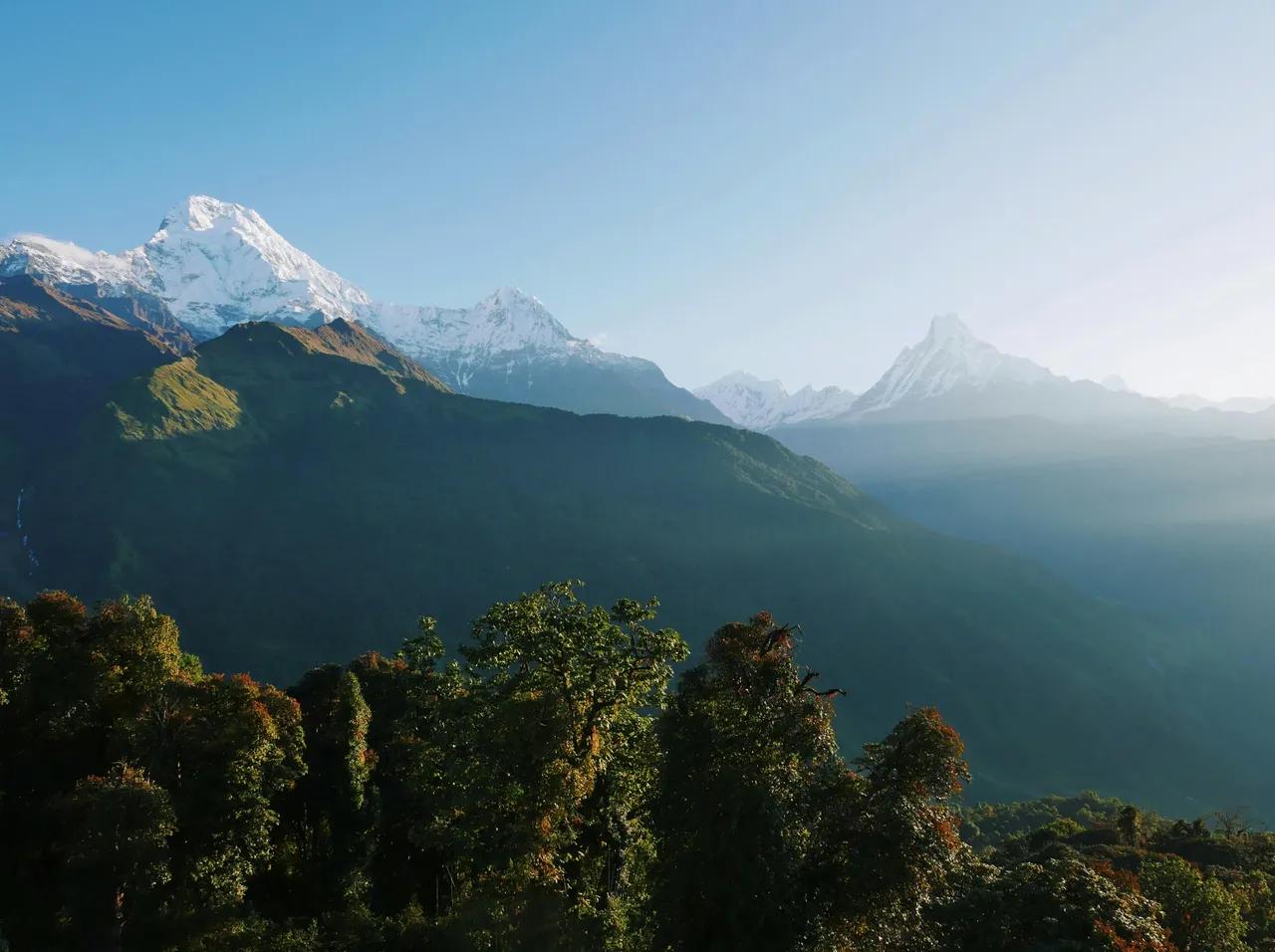
April weather isn't perfect — but it's close
Let me get the numbers out of the way first, because everybody asks. At the lower villages like Tikhedhunga and Ghandruk (around 1,500–2,000m), you're looking at daytime temperatures of 15–22°C. Warm enough to trek in a t-shirt. Nights drop to maybe 8–12°C — sleeping bag weather, but nothing brutal. Push higher to Chhomrong or Bamboo (2,000–2,500m) and days hover around 12–18°C. Still pleasant. Still comfortable. At Annapurna Base Camp itself — 4,130 meters — April days sit between 5–12°C and nights plummet to around -5 to -8°C. Cold, yes. Dangerous? Not if you've packed properly. More on that later. The real gift of April is the sky. You get 18–22 clear days on average. Mornings are almost always sharp — that deep blue Himalayan sky that makes the peaks look unreal. Clouds tend to build in the afternoon, sometimes a short rain burst around 3 or 4 PM, but it clears by evening. I've never lost an entire trekking day to weather in April. One thing though — the first week of April can still have some frost at higher elevations. If you're crossing Thorong La on the Circuit, there might be leftover snow. By mid-April, it's mostly melted on the main trails.
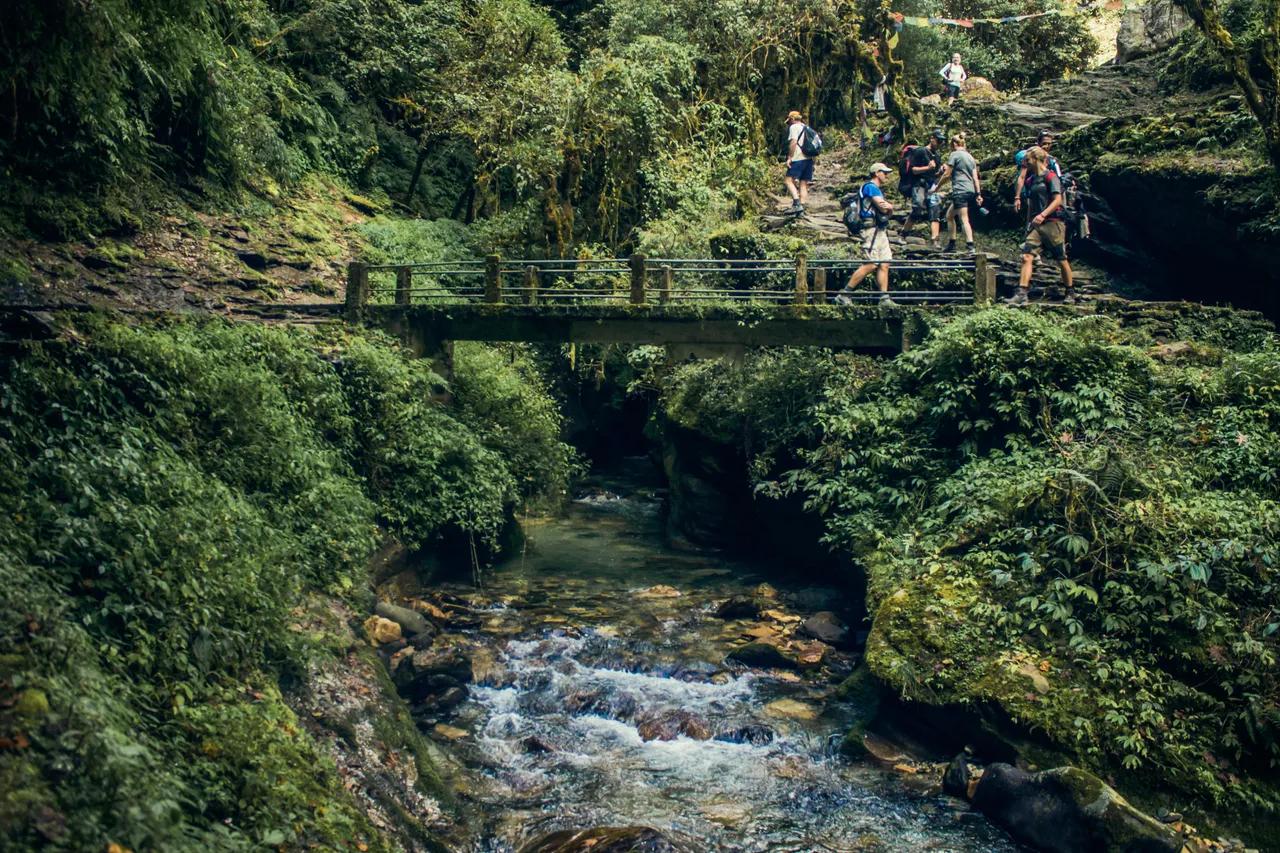
The Rhododendrons — okay, they really are that good
I know. Every Nepal trekking blog mentions rhododendrons in spring like it's a legal requirement. But here's the thing — when you're actually standing inside a forest of them at 2,800 meters, with red petals falling on the trail and Machapuchare poking through the canopy above you, the hype makes sense.
April is peak bloom in the Annapurna region. Not March (too early for the higher stuff), not May (the lower ones are already done). April catches everything at once.
Bloom timeline by altitude
Below 2,000 meters, the red Lali Gurans — Nepal's national flower — are already going strong by late March. By April, they're at their peak and carpeting the ground with fallen petals.
Between 2,000 and 3,000 meters is the sweet spot. This is where you hit the big forests — especially on the Ghorepani–Tadapani stretch, which has the world's largest rhododendron forest. In April, the trees here are ancient — some over a hundred years old — and they form these natural tunnels of crimson and pink. I'm not exaggerating when I say the trail between Ulleri and Ghorepani felt like walking through a cathedral made of flowers.
Above 3,000 meters, the rarer white and purple varieties bloom later — mid to late April, even early May. If you're heading toward ABC or doing the Mardi Himal route, you'll catch these at the upper forest camps.
The section from Ghorepani to Tadapani is widely considered the most stunning rhododendron walk in all of Nepal. If you do nothing else in April, do that stretch.
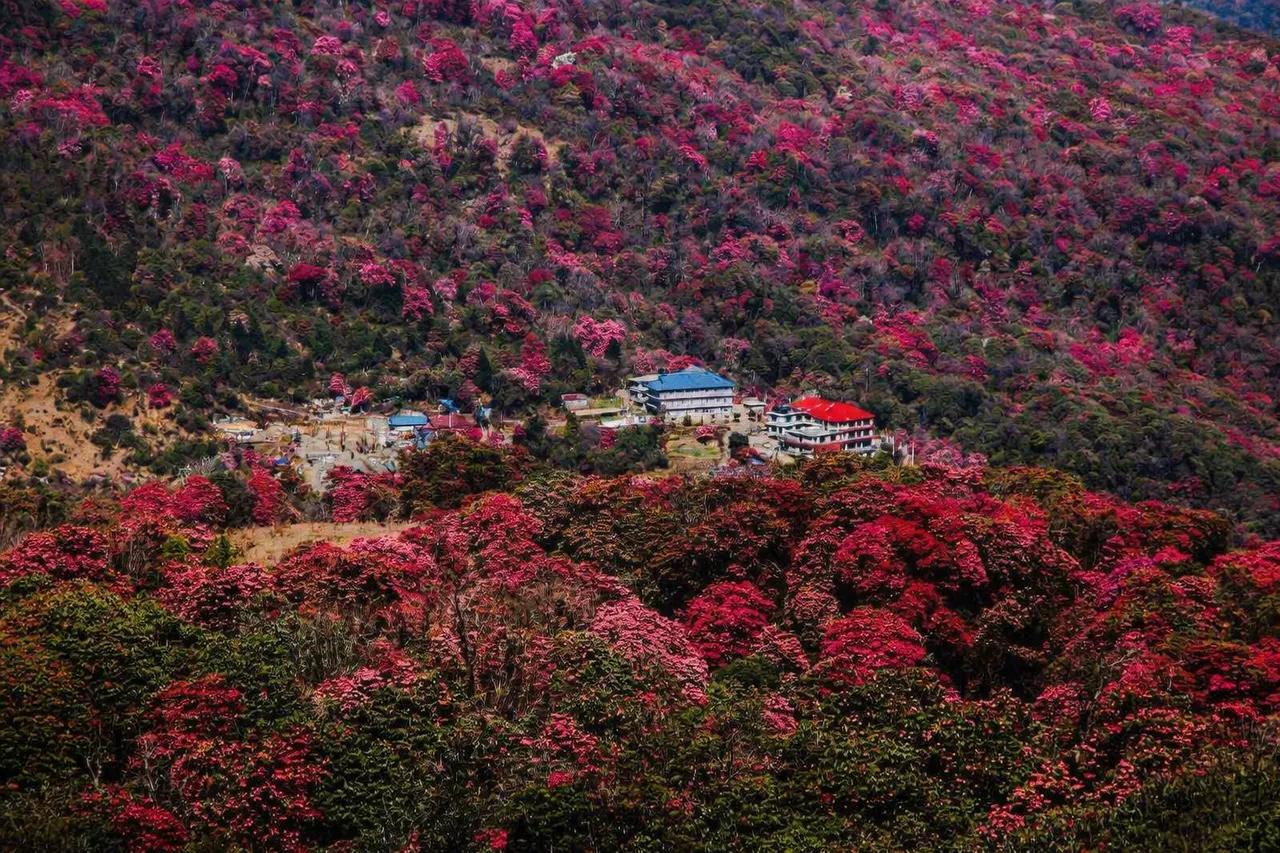
""I've trekked in the Alps, in Patagonia, in the Dolomites. Nothing prepared me for walking through those rhododendron forests above Ulleri. It's the only time on a trek where I stopped caring about the summit and just wanted to stay in the forest." "
Which Annapurna trek should you do in April?
The Annapurna region isn't one trek. It's a whole network. And which route you pick in April matters, because the season changes the experience on each one differently.
Annapurna Base Camp (ABC) — the classic
This is the one most people come for. 7–12 days, depending on your pace and starting point. You walk from subtropical forest up through bamboo groves into the Annapurna Sanctuary — a natural amphitheatre surrounded by peaks over 7,000 metres.
In April, the lower forests are blooming, the trail is dry and well-maintained, and the base camp itself (4,130m) is cold but manageable. You'll need the ACAP permit (NPR 3,000) and a TIMS card (NPR 2,000). Your agency handles both.
One honest note: ABC gets crowded in April. Especially the second and third weeks. If you can, start your trek in the first week of April—or go the Jhinu Danda route instead of the standard Nayapul start. Less traffic, and you get the hot springs as a bonus.
Ghorepani Poon Hill — short, sweet, and underrated
If you've only got 4–5 days, this is the one. It's the best rhododendron trek in Nepal — full stop. The sunrise from Poon Hill at 3,210 metres gives you Dhaulagiri (8,167 m), Annapurna I (8,091 m), Machapuchare (6,993 m), and about thirty other peaks. All in one panorama.
And because you're trekking through lower elevations, April weather here is genuinely warm and pleasant—no altitude headaches, no freezing nights.
I did this trek with my cousin last April, and we finished by saying, "That should be illegal for how easy and beautiful it was." It's beginner-friendly, but the views are world-class.
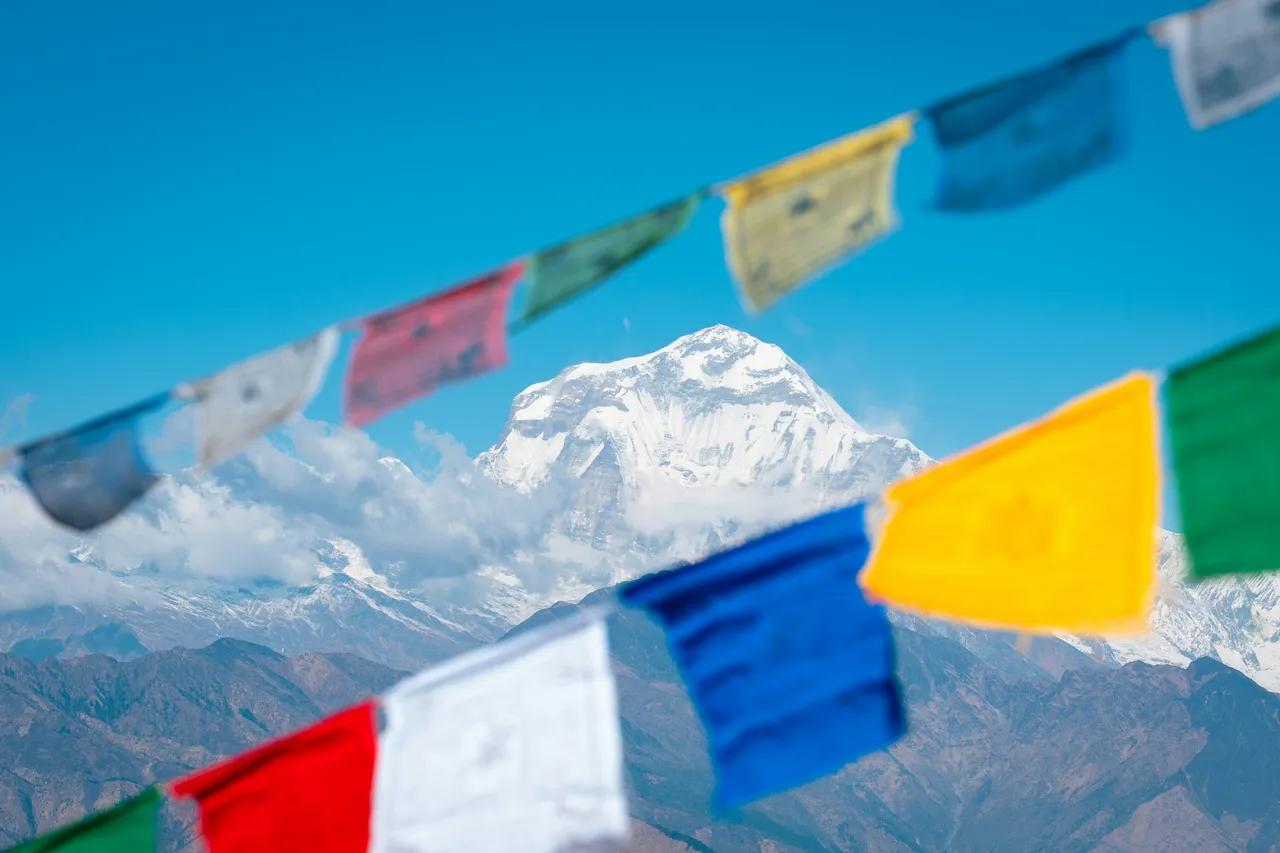
Annapurna Circuit — the big one
The circuit is 15–20 days and takes you all the way around the Annapurna massif, over Thorong La Pass at 5,416 metres. It's the most diverse trek in Nepal — you go from rice paddies to Tibetan-style desert landscapes.
In April, conditions are generally excellent for the Circuit. The pass is usually clear by mid-April, though I'd recommend checking conditions at Manang before attempting it in the first week. Snow can linger.
The best part of doing the Circuit in April? The lower Marsyangdi valley side (Besisahar to Manang) is warm and green, and the villages are alive with spring planting. It feels more culturally immersive than the autumn season when everyone's already harvested.
One update for 2026: the TIMS card requirement has been inconsistent lately. As of early 2026, you need only the ACAP permit for the standard circuit. But if you're adding Nar Phu Valley or Upper Mustang, you'll need the restricted area permit — that's a separate process and costs more. Check with your agency.
Mardi Himal — the quiet alternative
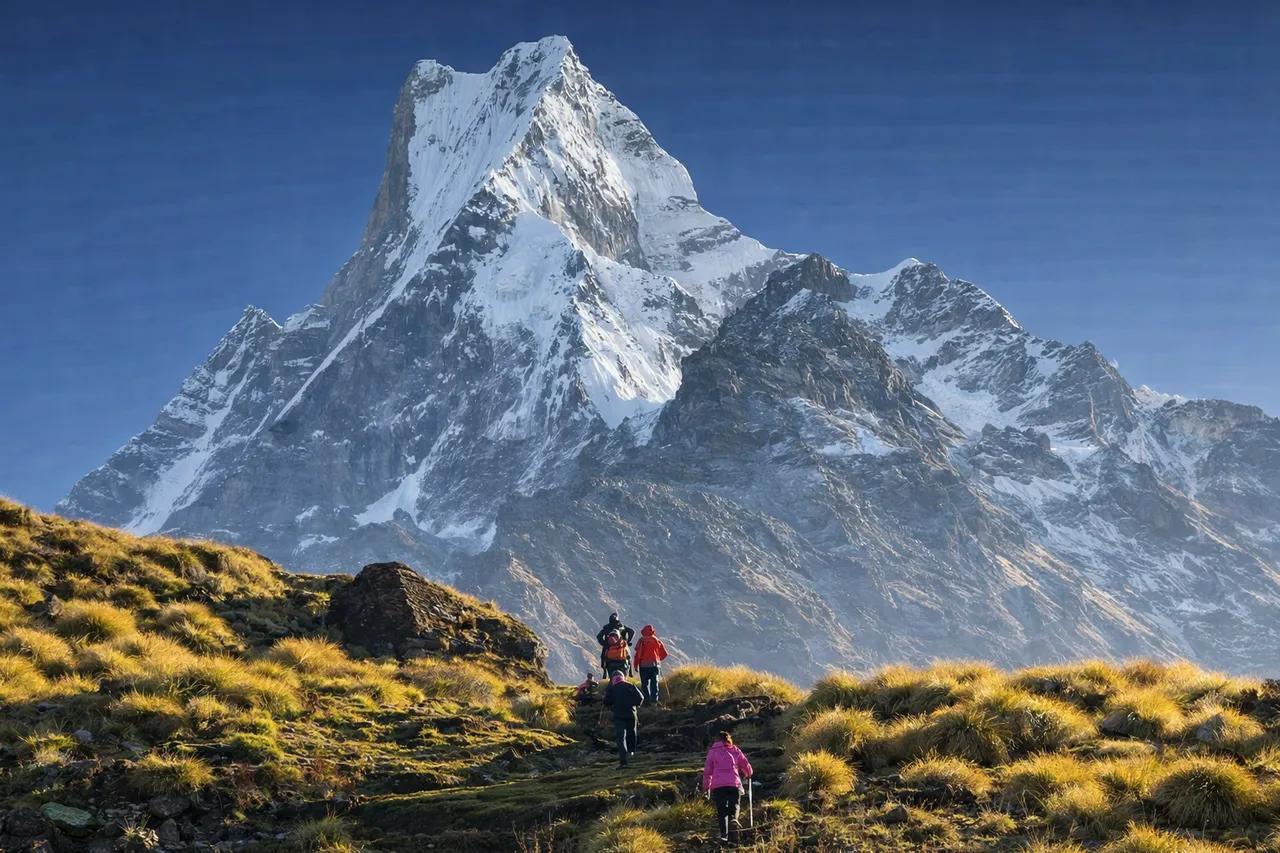
This one's been gaining popularity over the last couple of years, but in April, it's still far quieter than ABC or Poon Hill. The trail from Forest Camp to Low Camp in April is one of the most beautiful forest walks in the Annapurna region — the rhododendrons there rival Ghorepani.
It's 5–7 days, tops out around 4,500 metres at Mardi Himal Base Camp, and gives you face-to-face views of Machapuchare that you literally cannot get from any other trek. If you want something a bit off the beaten path but still well-served with teahouses, Mardi Himal in April is hard to beat.
What to pack for April (and what people get wrong)
April trekking is a layering game. The temperature swings are huge — you can go from 20°C at lunch to -5°C at night on the same day if you're moving between elevations.
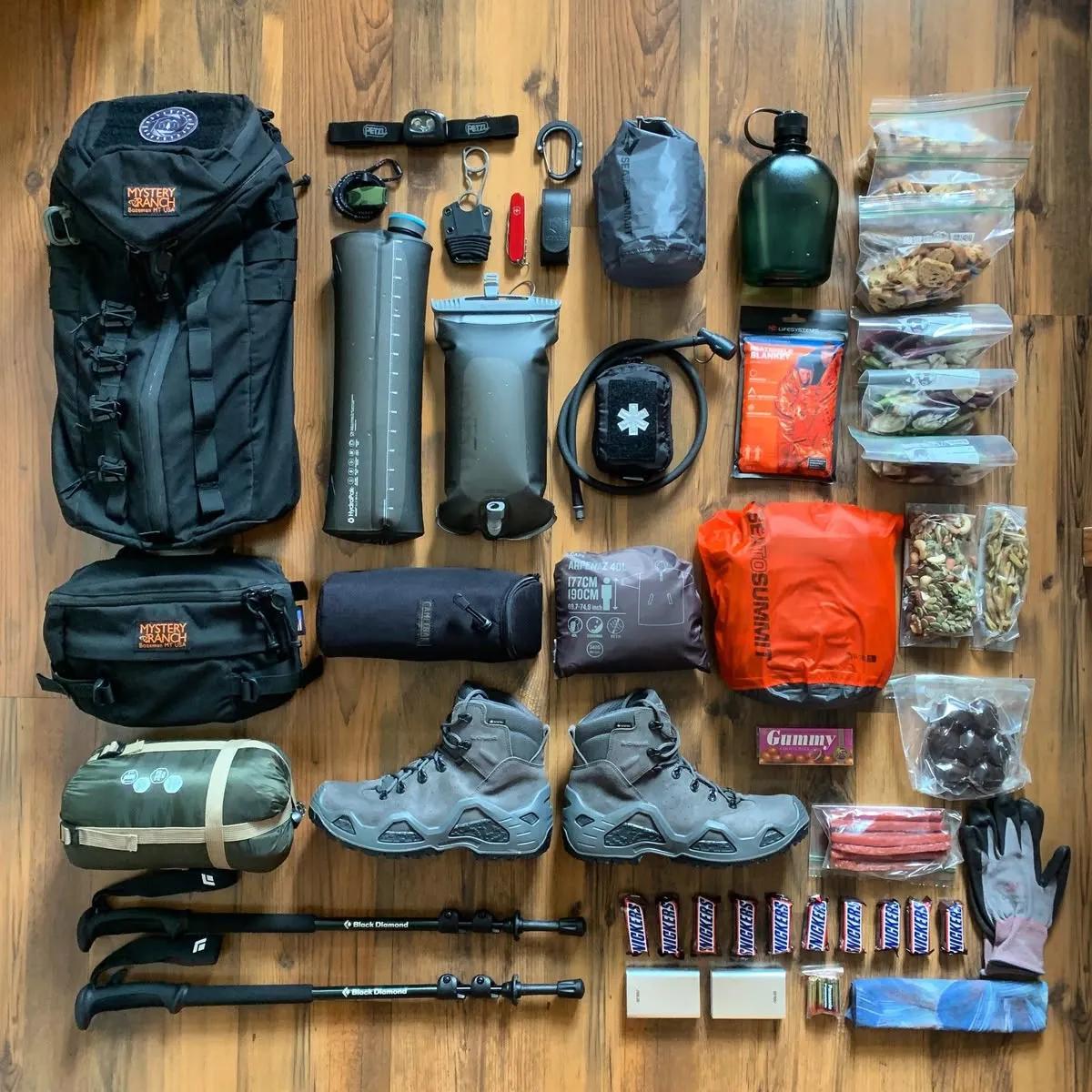
Here's what actually matters:
A good down jacket. Not optional above 3,000 metres. Even in April, evenings get cold fast once the sun dips behind the peaks. I use a lightweight, packable one (under 400g), and it's been enough for ABC-altitude cold.
Rain gear. April isn't monsoon season, but those afternoon showers are real. A waterproof shell jacket is non-negotiable. I've seen people get caught between Bamboo and Deurali in a downpour with nothing but a fleece. Don't be that person.
Sun protection. This is the one people underestimate. At 3,000+ meters in April, the UV is brutal. High-SPF sunscreen, good sunglasses, and a hat with a brim. I got the worst sunburn of my life at MBC because I forgot to reapply after lunch.
Skip the heavy winter gear. If you're packing thermal pants for an April trek below 4,000m, you're overpacking. A lightweight merino base layer and trekking pants handle 90% of April conditions. Save the heavy thermals for December.
Crowds — let's talk about it honestly
April is peak season. I'm not going to pretend it isn't.
The ABC trail gets busy, especially between Chhomrong and base camp. In the second and third weeks of April, you might find tea houses fully booked by afternoon if you haven't called ahead. The Poon Hill sunrise viewpoint? Expect 50–100 people up there at dawn.
But here's what nobody tells you: the Annapurna region is massive. The crowding problem is concentrated on two routes — ABC and Poon Hill — and mostly in the middle two weeks of April.
Ways to dodge the worst of it:
Trek in the first week of April. Fewer people, slightly cooler temperatures, and rhododendrons already blooming at lower altitudes.
Choose Mardi Himal or the Circuit. Both are dramatically quieter than ABC in April.
Start early each day. I mean, 6 AM is early. You'll have the trail to yourself for the first two hours while everyone else is eating breakfast at the lodge. By 8 AM, the trail fills up. By 6 AM, it's just you and the birds.
Book tea houses in advance for the ABC stretch. Your guide can call ahead. It's not glamorous, but it beats sleeping in a dining room because all the rooms are taken.
Tea house food in April — better than you think
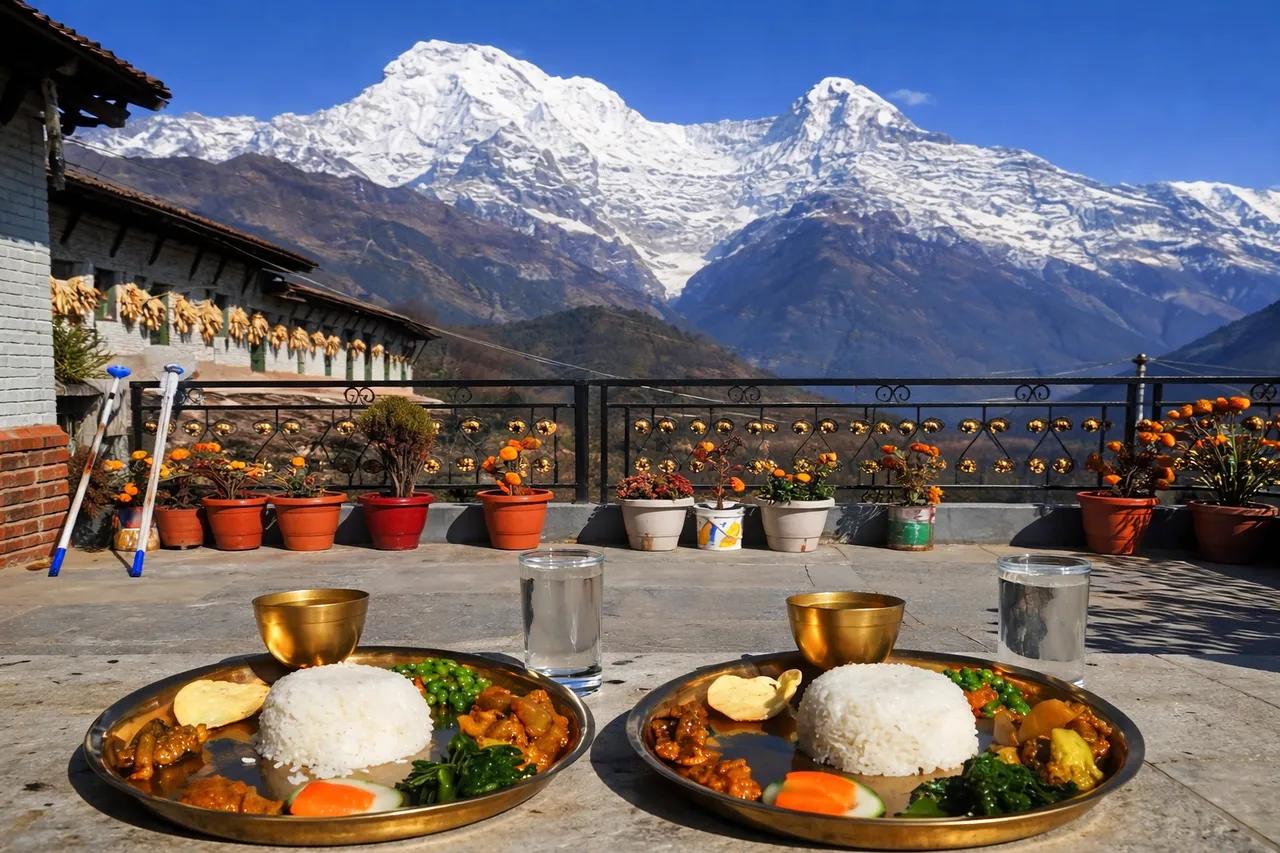
Spring means the tea houses are fully stocked. Unlike late autumn, when supplies run low, April lodges have fresh vegetables coming up from the valleys. Dal bhat is obviously the move — unlimited refills, and it genuinely fuels you better than anything else on the trail. I've tried "saving money" by eating noodles and regretting it by 2 PM when my legs turn to jelly.
At lower elevations, you'll get surprisingly good food. Ghandruk has places serving decent pizza (I know, I know — but after four days of dal bhat, you'll understand). Chhomrong has a bakery that does cinnamon rolls that have no business being that good at 2,170 metres.
Higher up, options narrow. At Deurali and MBC, stick to dal bhat, simple noodle soups, and chapati. The fried items tend to sit heavily at altitude. And drink way more water than you think you need — the dry April air dehydrates you faster than you'd expect.
One more thing: chiya, Nepali tea. It costs Rs 50–80 at most lodges, and it's the best thing you'll drink on the trail. Sweet, milky, spiced with cardamom. I went through about six cups a day. No regrets.
Permits and costs — the 2026 update
This changes often enough that I want to give you the latest.
For the ABC trek and Poon Hill, you need two permits: the Annapurna Conservation Area Permit (ACAP) at NPR 3,000 (roughly USD 22) and the TIMS card at NPR 2,000 (about USD 15). Both can be arranged in Pokhara — most trekking agencies handle this, and you'll need two passport-sized photos plus a photocopy of your passport.
For the Annapurna Circuit, as of early 2026, the ACAP is the main required permit. TIMS enforcement has been spotty on the circuit — some checkpoints ask for it, others don't. Get it anyway. It's cheap and avoids headaches.
If you're adding restricted areas like Nar Phu Valley or Upper Mustang to the circuit, that's a separate restricted area permit, and it costs significantly more — USD 100 per person for Nar Phu and USD 500 for the first 10 days of Upper Mustang.
Costs on the trail itself: budget roughly USD 35–45 per day for food and accommodation at tea houses. A room costs Rs 1000–1500 per night (sometimes free if you eat at the lodge), and meals run Rs 700–1500 each depending on altitude. Higher altitude = higher prices. A plate of dal bhat at ABC costs nearly double what it does in Chhomrong.
Hiring a guide runs USD 25–35 per day. A porter is USD 15–20 per day. I'd recommend at least a guide — they know the trail, they handle logistics, and the Nepal Tourism Board now requires licensed guides in ACAP areas for foreign trekkers.
The stuff nobody warns you about
Leeches aren't a problem in April. That's monsoon stuff. But dust can be – especially on the lower trail sections where jeep roads have replaced walking paths. Bring a buff or bandana for the Nayapul-to-Tikhedhunga stretch.
Sunburn at altitude is real. I mentioned it already, but I'll say it again because I've seen so many trekkers looking like lobsters at base camp. The UV intensity at 4,000m is no joke. Reapply every two hours.
The Nayapul road construction has changed the start of some Annapurna treks. Some trekkers now take a jeep to Kimche or even Ghandruk to skip the dusty road walking section. It saves about a day, but you miss some nice villages. Your call.
Phone charging costs Rs 100–300 per device at most tea houses. Bring a power bank. Wi-Fi exists at lower lodges, but don't count on it above Deurali.
And this one's important: don't skip the acclimatisation. Even though April weather makes you feel invincible, altitude sickness doesn't care about the season. If you're heading above 3,500m, take it slow. One extra day in Chhomrong or Manang is worth more than pushing through and getting a splitting headache at base camp.
Is April really the best month? My honest take
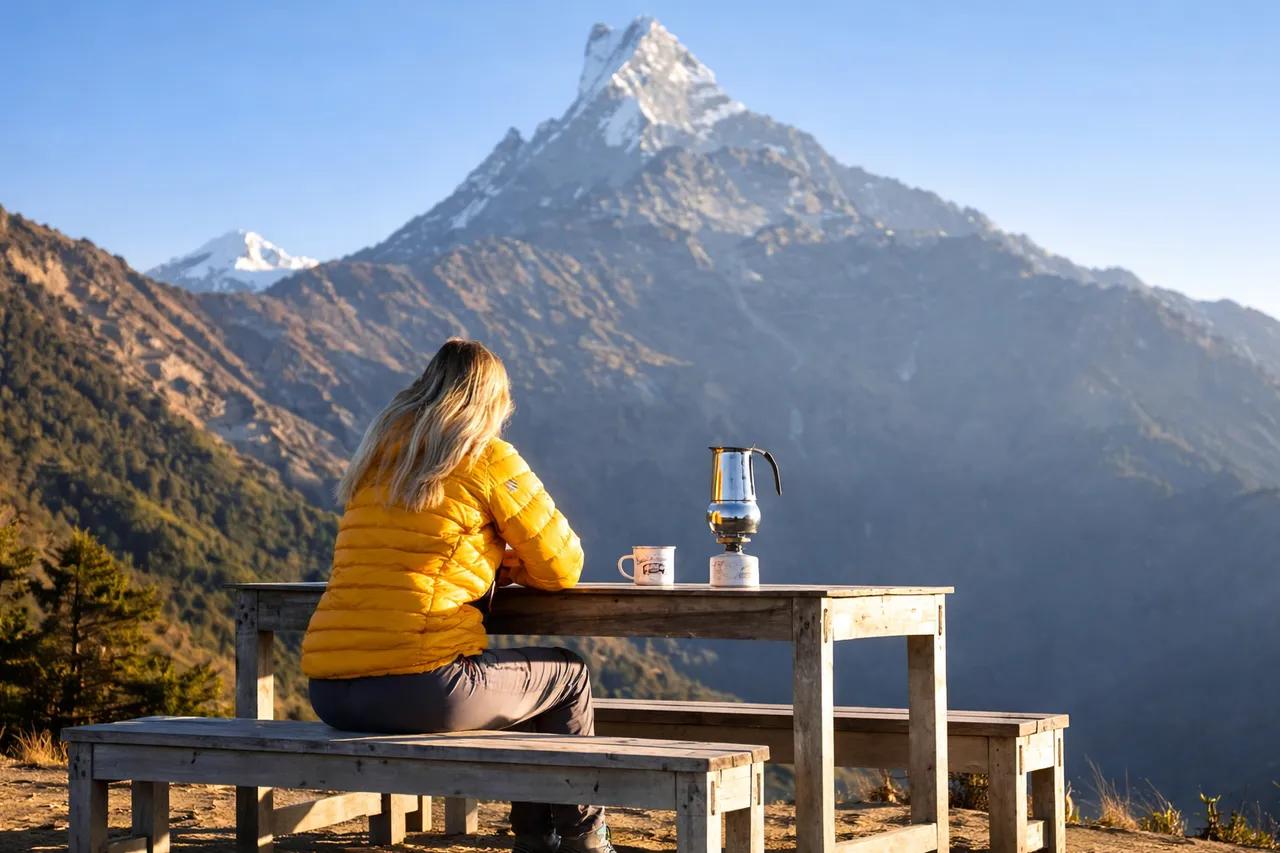
October gets all the hype. And honestly, autumn is incredible — clearer skies, fewer hazy days, and cooler temperatures at lower elevations.
But April gives you something October can't: the rhododendrons. And that alone shifts the entire experience. The Annapurna region in April feels alive in a way that autumn doesn't — everything is growing, blooming, buzzing. The villages are active with spring planting. The waterfalls are flowing from snowmelt. The air smells like flowers and wet earth.
Is it slightly hazier than October at lower elevations? Sometimes. Is it a bit more crowded on ABC? Yes. But above 2,500 metres, the visibility is excellent, and the trade-off is walking through some of the most beautiful forests on the planet in full bloom.
If I had to pick one month for the Annapurna region — and only one — I'd pick the first week of April. Every time.
Ready to plan your April Annapurna trek? Browse verified trekking packages from trusted agencies on Travories — compare itineraries, prices, and inclusions all in one place.
Frequently asked questions
Is April too crowded for Annapurna Base Camp?
It's busy but manageable. The second and third weeks of April are the most crowded. Trek in the first week, start early each morning, and book tea houses ahead – you'll be fine. Or pick the Mardi Himal trail for a quieter alternative.
When do rhododendrons bloom in the Annapurna region?
Blooming starts at lower altitudes (below 2,000m) in late March and moves upward. Peak bloom between 2,000–3,000m happens in April. Higher altitude varieties (above 3,000m) bloom in late April to early May. For the best all-round display, mid-April is ideal.
What permits do I need for the Annapurna trek in 2026?
You need the ACAP permit (NPR 3,000) and TIMS card (NPR 2,000). Both are available in Pokhara or Kathmandu. Your trekking agency can arrange them. If visiting restricted areas like Nar Phu Valley, you'll need an additional restricted area permit.
Can beginners do the Annapurna trek in April?
Absolutely. The Ghorepani Poon Hill trek is perfect for beginners — 4–5 days, lower altitude, excellent tea house infrastructure. ABC is moderate difficulty and fine for first-timers with reasonable fitness. The Circuit is longer and crosses a high pass, so it's better suited to those with some trekking experience.
How much does an Annapurna trek cost in April 2026?
Budget roughly USD 35–45 per day for food and accommodation on the trail. Add USD 25–35/day for a guide and USD 15–25/day for a porter. Permits cost about USD 37 total. A 10-day ABC trek with a guide typically runs USD 500–800 all-in through a local agency at the minimum cost – compare packages on Travories to find the best deal.
Travel enthusiast and writer