Mera Peak Climbing – 19 Days
Not yet rated

Overview
The Mera Peak climb takes you to the summit of Nepal's highest trekking peak, at about 6,476 m, through the quiet Hinku valley south of Everest. The climb itself is a long glacier walk rather than a technical ascent, which makes Mera a popular first 6,000 m peak for fit trekkers who want to learn basic mountaineering. This 19-day itinerary uses the slower approach from Lukla through Paiya and Pangkongma, giving your body time to adjust before Khare and the high camp.
Highlights
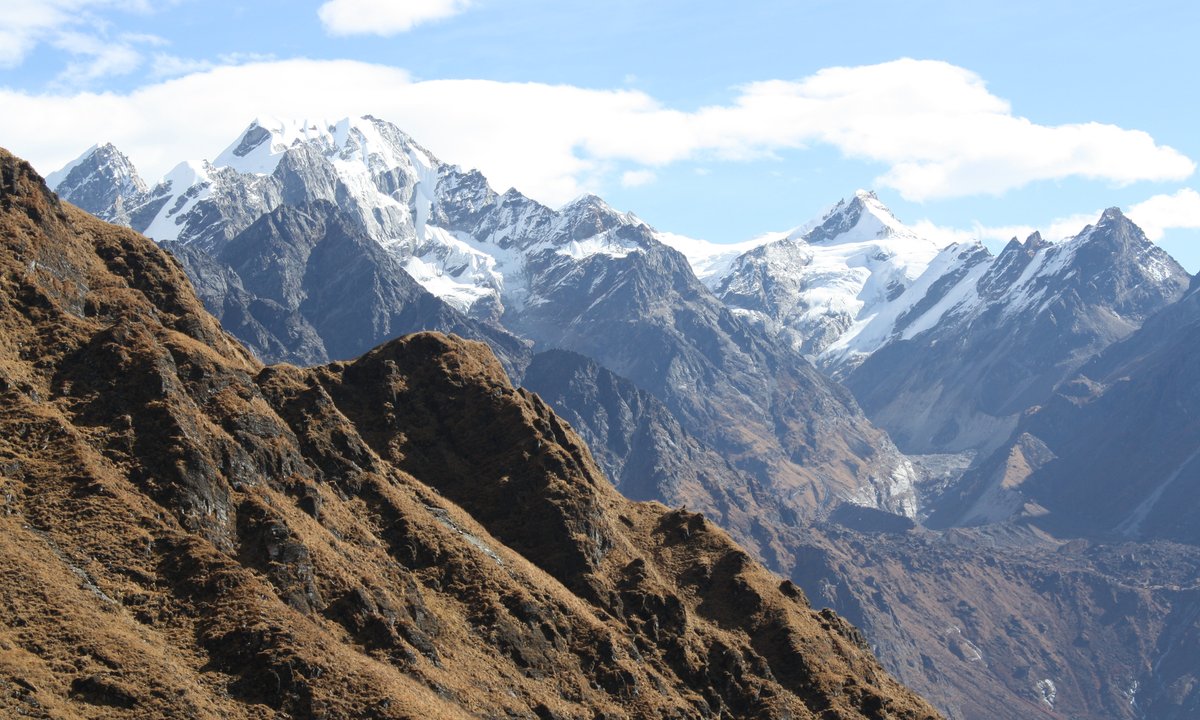
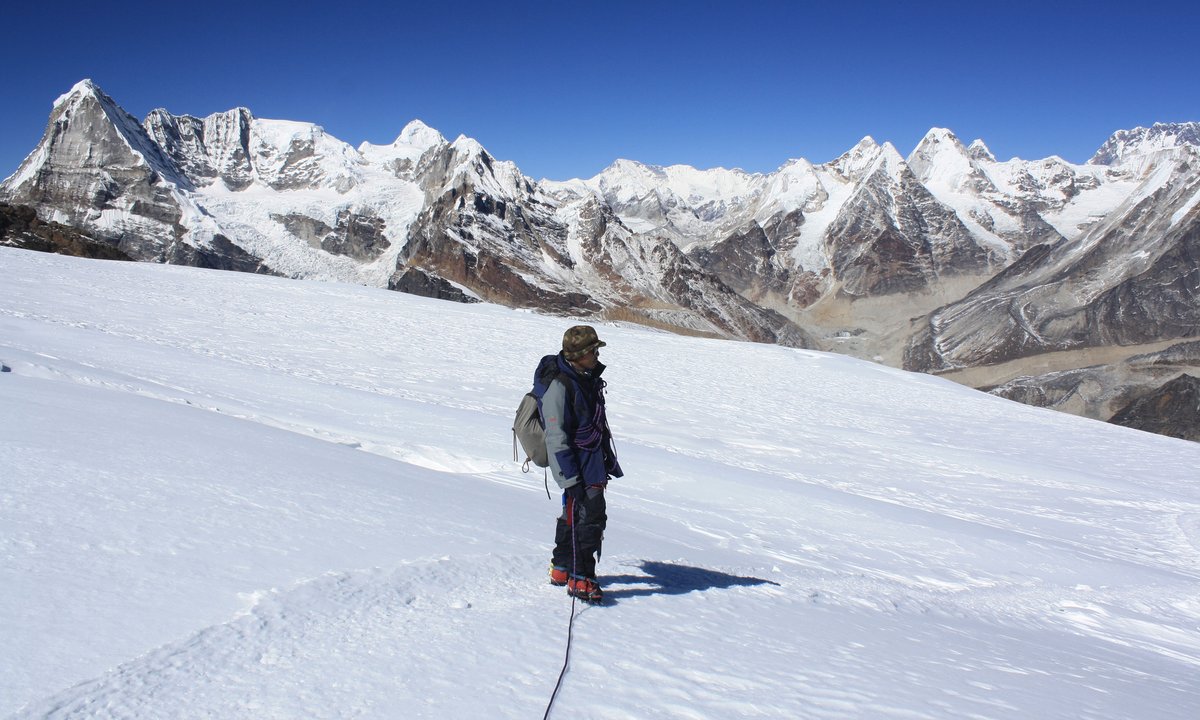
- Stand on a 6,000 m summit with Everest, Lhotse, Makalu, Cho Oyu and Kangchenjunga in one view
- A full training day at Khare on crampons, ice axe and fixed ropes
- Camp on the rock outcrop of Mera High Camp, above the clouds
- Walk the rarely crowded Hinku valley and its forests
- Cross the prayer-flagged Zatrwa La on the way out
- A spare day built in for summit weather
Is this climb for you?
You don't need climbing experience, but you do need to be fit and comfortable walking six to seven hours a day for two weeks. Previous trekking at altitude, ideally above 4,000 m, helps a lot. The summit day starts in the middle of the night and lasts 8 to 12 hours. The main difficulty is the altitude, not the technique, so the itinerary includes acclimatization days at Thangnak and Khare.
A day on the trail
Mornings begin with tea at around 6:30 and breakfast before the cold lifts. You walk at your own pace with the guide, stopping for lunch at a lodge on the way, and usually arrive by mid-afternoon. Evenings are spent around the dining-room stove, where the guide explains the next day.
Food and lodging
The lodges on this route are simpler than those on the Everest Base Camp trail: shared rooms, basic toilets and hearty meals such as dal bhat, noodles and potatoes. Two nights are in tents at the high camp. Charging and hot showers cost extra where available.
Safety and acclimatization
The route gains height quickly on some days, which is normal for Mera, so the plan builds in rest and training days and a spare day for the summit. Your guide checks your oxygen level and pulse each evening with an oximeter. Headaches, nausea or unusual tiredness are signs to slow down or go lower, and the guide can turn back at any point if the team is not ready.
Best time to go
Spring (March to May) and autumn (September to November) give the most stable weather. Winter is very cold and snowy, and the monsoon brings rain, leeches and cloud.
Permits
You need a Mera Peak climbing permit, a national park entry permit and the local municipality permit. Current fees are confirmed at booking.
Key Facts
Book Now
Make it your own in the planner: change days, stops and stays.
Itinerary
Tribhuvan International Airport - Thamel, Kathmandu
Stops in a Day
Description
Arrive at Tribhuvan International Airport, where a representative meets you and drives you to your hotel in Thamel. Rest after the journey. In the evening your guide goes through the route, checks your climbing gear against the list, and arranges rental for anything missing. Thamel has several shops that hire out mountaineering boots, crampons and harnesses, and fitting them now is far easier than finding a problem at Khare.
- Overnight: Kathmandu (about 1,400 m)
- Airport transfer: about 30 minutes
Thamel - Paiya(Chutok)
Stops in a Day
Description
An early flight lands you at Lukla. In busy months it leaves from Manthali (Ramechhap) instead, after a drive of five to six hours. Rather than heading north with the Everest crowds, you turn south on a quieter trail through pine and rhododendron forest towards Paiya. The walk is short on purpose: the slow approach on the next few days is what makes this route kinder to your body than the direct crossing of Zatrwa La.
- Overnight: Paiya (about 2,800 m)
- Flight: about 35 minutes to Lukla
- Trek: 3–4 hours
Paiya (Chutok) - Pangkongma
Stops in a Day
Description
The trail rolls through farmland and forest, crossing streams and the low Kari La pass before reaching Pangkongma, a Rai and Sherpa village with a small monastery above it. This is a long day with plenty of up and down, though the overnight altitude barely changes. Expect few other trekkers and simple, friendly lodges.
- Overnight: Pangkongma (about 2,850 m)
- Trek: 6–7 hours
Pangkongma - Nashing Dingma
Stops in a Day
Description
Cross the Pangkongma La and descend into the Hinku side of the region, then climb again through bamboo and forest to Nashing Dingma. The views open up towards the peaks around the Hinku valley for the first time. Your legs do most of the work today, while your sleeping altitude stays low enough for a comfortable night.
- Overnight: Nashing Dingma (about 2,960 m)
- Trek: 6–7 hours
Nashing Dingma - Chholem Kharka
Stops in a Day
Description
A steady climb leaves the last permanent villages behind and reaches the summer pastures of Chholem Kharka. The forest thins out, the air cools, and herders’ stone huts replace farmhouses. Drink plenty, walk slowly, and keep an eye on how you feel: from here on every night is above 3,500 m.
- Overnight: Chholem Kharka (about 3,600 m)
- Trek: 6–7 hours
Chholem Kharka - Khola Kharka
Stops in a Day
Description
The highest point of the approach crosses open ridges above the treeline to Khola Kharka. On a clear day Mera itself comes into view to the north. It is a big jump in altitude, so keep the pace gentle and go to bed early. Tomorrow you descend again, which helps the acclimatization.
- Overnight: Khola Kharka (about 4,270 m)
- Trek: 6–7 hours
Khola Kharka - Kothe
Stops in a Day
Description
Drop steeply through forest into the deep Hinku valley and follow the river up to Kothe, a cluster of lodges beside the water. The descent is hard on the knees, so trekking poles help. Losing height today usually means a better night’s sleep after yesterday’s high, cold pasture.
- Overnight: Kothe (about 3,600 m)
- Trek: 6–7 hours
Kothe - Thangnak
Stops in a Day
Description
Follow the Hinku river north, past the Lungsumgba Gompa carved into a rock face, to Thangnak, a summer grazing settlement beneath the moraines of the Charpate glacier. The gradient is gentle but the height gain is real, so walk slowly. You have already slept at a similar altitude two nights ago.
- Overnight: Thangnak (about 4,350 m)
- Trek: 6–7 hours
Thangnak - Thangnak
Stops in a Day
Description
A rest day for your body, not your legs. Hike a few hundred metres up the ridge behind Thangnak for views of Kusum Kanguru and the Charpate glacier, then come back down to sleep. Climbing high and sleeping low like this is one of the best ways to prepare for the altitude ahead.
- Overnight: Thangnak (about 4,350 m)
- Acclimatization hike: 3–4 hours
Thangnak - Khare
Stops in a Day
Description
A short, steep walk over glacial moraine brings you to Khare, the last lodge settlement and the base for the climb. The north face of Mera and the glacier route rise directly above the village. Arrive early, rest, and let your guide check every piece of climbing gear before tomorrow’s training.
- Overnight: Khare (about 5,045 m)
- Trek: 3–5 hours
Khare - Khare
Stops in a Day
Description
Your climbing guide spends the day on technique: walking in crampons, using the ice axe, clipping into a fixed rope and moving roped together on a glacier. A short hike above Khare adds more acclimatization. If something feels wrong, this is the day to say so, while there is still time to adjust the plan.
- Overnight: Khare (about 5,045 m)
- Training and hike: 4–5 hours
Khare - Mera High Camp
Stops in a Day
Description
Climb onto the Mera glacier and over the Mera La to the high camp, set on a rocky outcrop with one of the widest mountain panoramas in Nepal: Everest, Lhotse, Makalu, Cho Oyu and Kangchenjunga on a clear evening. The team pitches tents and cooks an early dinner. Sleep as much as you can; the alarm goes off in the middle of the night.
- Overnight: Mera High Camp (about 5,780 m), tented camp
- Trek: 6–7 hours, 4–5 km
Mera High Camp - Khare
Stops in a Day
Description
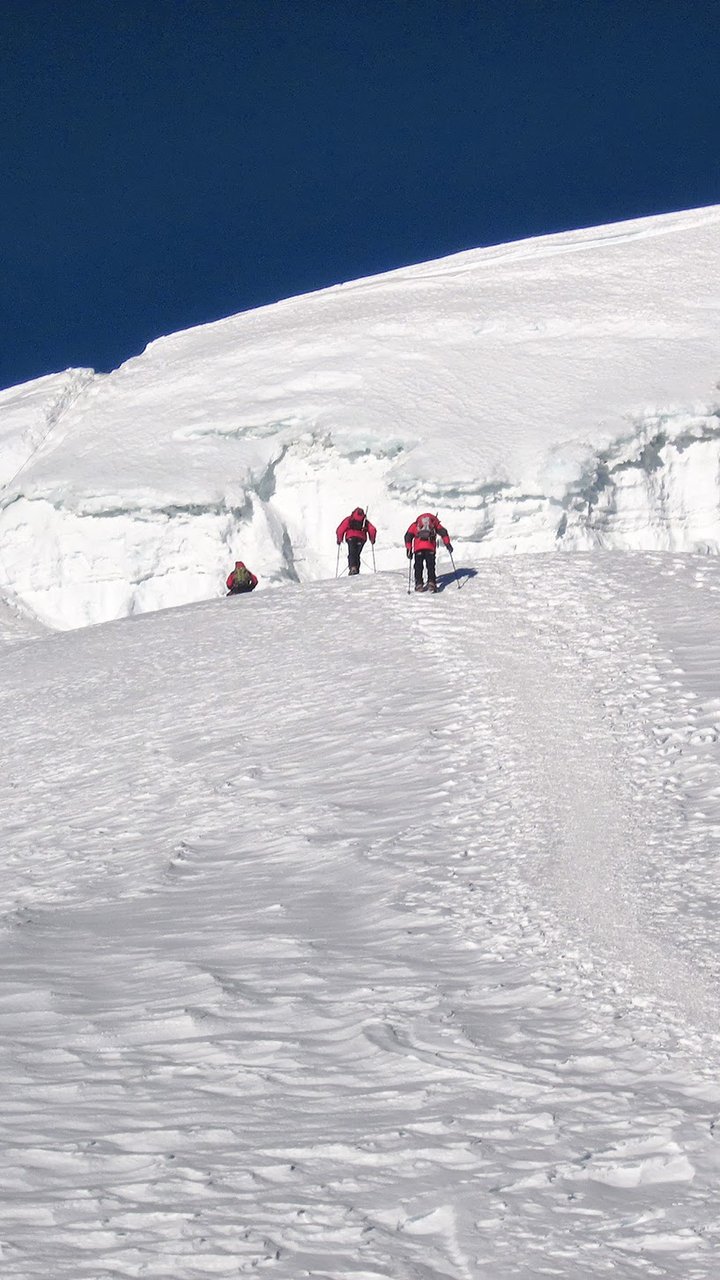
Leave camp around 2–3 am, roped together, and climb the long glacier slopes by headlamp. The angle is moderate, but the altitude makes every step slow. The final short, steep section to the central summit is usually protected with a fixed rope. After photos at sunrise you descend all the way to Khare, which makes this the longest day of the trip.
- Summit: Mera Peak (about 6,476 m)
- Overnight: Khare (about 5,045 m)
- Climb and descent: 8–12 hours, about 15 km
Khare - Khare
Stops in a Day
Description
A spare day for weather. If wind or snow stopped the summit attempt, this day lets you try again. If everything went to plan, it is a well-earned rest in Khare, or you can start down early and gain a day at the end. Your guide decides with you based on the conditions.
- Overnight: Khare (about 5,045 m)
Khare - Kothe
Stops in a Day
Description
Retrace the Hinku valley downhill to Kothe. Thicker air makes the walking feel easy after the summit, and the forest and river sounds return. It is a good day to look back up the valley and see how far you came.
- Overnight: Kothe (about 3,600 m)
- Trek: 4–6 hours, about 13 km
Kothe - Thuli Kharka
Stops in a Day
Description
Leave the valley and climb west through forest to the open pastures of Thuli Kharka. This is the shorter return route, used once you are well acclimatized. The climb is steady and the lodges at the top are simple but welcoming.
- Overnight: Thuli Kharka (about 4,300 m)
- Trek: 5–7 hours, about 13 km
Thuli Kharka - Lukla
Stops in a Day
Description
Cross the Zatrwa La, marked with prayer flags and cairns, for a last look at the high peaks, then descend steeply to Chutanga and on to Lukla. The trail can be icy early in the morning, so take your time on the steep sections. Celebrate the end of the trek with your team in the evening.
- Pass: Zatrwa La (about 4,610 m)
- Overnight: Lukla (about 2,840 m)
- Trek: 6–8 hours, about 12 km
Lukla - Thamel, Kathmandu
Stops in a Day
Description
Fly back to Kathmandu, or to Manthali followed by a road transfer in busy months. Mountain flights depend on the weather, so keep the afternoon free. Use the rest of the day to return rental gear, shop in Thamel, or simply enjoy a long shower and a farewell dinner.
- Overnight: Kathmandu (about 1,400 m)
- Flight: about 35 minutes
Thamel, Kathmandu - Tribhuvan International Airport
Stops in a Day
Description
A private transfer takes you to the airport about three hours before your flight home. If you have extra time, add a day or two in Kathmandu: it gives a buffer in case the Lukla flights are delayed, and lets you visit the old palace squares and stupas of the valley.
- Airport transfer: about 30 minutes
Things Included
Support Team
- Licensed English-speaking trekking guide
- Climbing guide from Khare to the summit and back
Permits
- Mera Peak climbing permit
- National park entry permit
Pickup and Drop Service
- Airport pick-up and drop-off in a private vehicle
Accommodation
- 2 nights in a Kathmandu hotel with breakfast
- 15 nights in tea houses on the trek
Transport
- Kathmandu–Lukla–Kathmandu flights (or via Manthali/Ramechhap with a road transfer)
Food
- Breakfast, lunch and dinner during the trek and climb
- Farewell dinner in Kathmandu
Additional Perks
- Group climbing equipment: rope, ice screws and snow bars
- Tents and kitchen equipment at the high camp
Things Excluded
- International flights and Nepal visa fee
- Travel insurance with high-altitude helicopter evacuation cover (required)
- Lunch and dinner in Kathmandu, except the farewell dinner
- Personal climbing gear (rental available in Kathmandu)
- Drinks, snacks, hot showers, Wi-Fi and charging on the trek
- Extra nights caused by flight delays or leaving early
- Tips for guides and porters
Things To Pack
Clothing and Backpack
- Down jacket rated for well below freezing
- Waterproof and windproof shell jacket and trousers
Footwear
- Broken-in trekking boots for the approach
- Camp shoes or sandals
Toiletries and Personal Items
- High-factor sunscreen and lip balm
- Hand sanitiser and quick-dry towel
Gadgets and Extras
- Headlamp with spare batteries
- Glacier sunglasses (category 4)
Climbing Gears
- Mountaineering boots that take crampons (rentable in Kathmandu)
- Crampons and an ice axe
Optional but Useful
- Trekking poles
- Energy snacks for the summit day